Showing posts with label FOLK. Show all posts

Wednesday, November 5, 2025

42. Love and Theft


42. Love and Theft, Bob Dylan (Columbia, 2001)

This is a placeholder for an entry to come in my Top 125 Albums of the 2000s, which I selected at the end of 2009. This blog has been dormant since autumn 2010, and my intention is to finish the final 45 entries as originally selected despite the distant vantage point and my opinions having changed in the interim. 

Read the NOYOUCMON mission statement here.

Wednesday, September 15, 2010

50. A Star for Bram


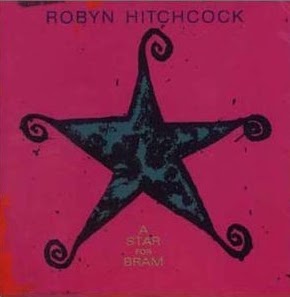
50. A Star for Bram, Robyn Hitchcock (Editions PAF!, 2000)

The Aughts began slowly for veteran British songwriter Robyn Hitchcock.  His Warner Bros. contract ended after three albums (including Mossy Liquor, the vinyl-only companion piece to his Moss Elixir album, both ’96), leaving him without major-label support for the first time since ’86.  Between ’00 and ’03 he quietly issued three albums on his own Editions PAF! label.  This trio included Robyn Sings, a live double album composed entirely of Bob Dylan covers, much of which had previously appeared as an extended appendix to the Warner-issued, promo-only ’97 single for his song Beautiful Queen.  The recycling of promo-only B-sides following the loss of a contract might seem an inauspicious move, were the performances not strong, sought-after material likely rejected for full release by Warner.  Two years before Robyn Sings, though, slipped another unusual album, A Star for Bram.  Released “under special license from Warner,” it arrived with the feel of a fan-club album and cover art almost replicating that of Jewels for Sophia (’99), his final Warners album.  Often diminished as a mere collection of Sophia outtakes, Bram indeed includes two songs that appeared on the Warner-issued, Sophia-supporting promotional EP entitled Rare Jewels.  While the Aughts would be Hitchcock’s most prolific decade, A Star for Bram was just one of a string of albums from the decade comprising outtakes, old material, or other oddities while masquerading as new releases.  A Star for Bram is unique among its colleagues, however, as it is arguably stronger than any of the four “real” new LPs that Hitchcock issued in the Aughts.

Bram is a tempered, darker sibling to Jewels for Sophia.  The Warner album is bright, often raucous, and comical; one can almost imagine a Warner executive opting against Bram’s less immediate songs and saying, “We want the funny songs, the ones where you talk about vegetables a lot.”  While the two albums’ most haunting song (No, I Don’t Remember Guildford) does appear on Sophia and Bram is not devoid of levity, Bram is the more subdued record.  It opens with two understated acoustic numbers; the second, the gently shimmering I Saw Nick Drake, is like a transcription of a dream, with Hitchcock meeting the long-dead British folksinger, doing chores together, and interacting in the surreal ways that only the subconscious can manifest; it is built on a transfixing repeated guitar figure and joined by Hitchcock’s highly reverbed wordless humming between the verses.  Judas Sings (Jesus and Me) and I Used to Love You are both stripped-down ballads, the latter using only voice and piano.  Bram’s electric numbers outnumber the unplugged entries, but these, too, are largely subdued.  A minimal, sax-tinted groove supports the skeletal boogie of Adoration of the City; the mild skiffle of The Philosopher’s Stone features just Jon Brion and Hitchcock, the latter adding melodic accents with a “harmony machine.”  The record’s two expository highlights are Nietzsche’s Way, its title punning on Spirit’s 1970 song Nature’s Way, and a new studio recording of Hitchcock’s nostalgic travelogue 1974, which previously appeared on the ’98 in-studio live soundtrack Storefront Hitchcock.  A final thread connecting the album to Jewels for Sophia is a dub version of that album’s Antwoman that gives the lilting original an ominous tint.  Hitchcock’s departure from the major-label system may have resulted in a circuitous new pattern of record-making, but as long as his catalog continues to generate albums as reliable as A Star for Bram it will be worth following.

Highlights: 1974, Daisy Bomb, Nietzsche’s Way, I Saw Nick Drake

Sublime bit: Those spectral, wordless choruses of I Saw Nick Drake.

Read the NOYOUCMON mission statement here.

Saturday, September 11, 2010

51. Just Beyond the River


51. Just Beyond the River, James Yorkston and the Athletes (Domino, 2004)

James Yorkston hails from Fife, Scotland, also home to Fence, a musicians’ collective and label borne of Kenny Anderson’s bankrupt record shop.  Anderson has recorded over two dozen albums as King Creosote; but, of Fence artists in the Aughts, it was Yorkston who held the highest profile.  His demo, recorded after a spell with various rock groups, attracted influential DJ John Peel and resulted in a ’01 solo 7” on the Bad Jazz label.  Entitled Moving Up Country, Roaring the Gospel and credited, for reasons unforthcoming, to “J. Wright Presents,” it is a soulful, sleepy shuffle that he reworked for his ’02 debut LP Moving Up Country.  After one more split single and a compilation appearance, Yorkston signed to Domino and issued a bevy of singles and EPs with them before his first full-length.  Yorkston remained part of the Fence community even after signing to a larger label, working with its artists including The Pictish Trail (aka Johnny Lynch, Fence co-director) and UNPOC.  Yorkston’s own work descends from Scottish and Irish folk music, guitar-based but with traditional instruments—whistle, pipes, accordion, fiddle, bouzouki.  His folk-based songs are often slow and deliberate, his voice rarely straying from a narrow range; the result is far from the celebratory jigs and reels associated with the traditional music of Yorkston’s homeland. 

Yorkston’s second full-length, Just Beyond the River, again recorded with a loose association of musicians dubbed the Athletes, utilizes stronger compositions and more focused playing for a sound more starkly emotional than his previous works.  On his debut LP Yorkston employed former Cocteau Twins bassist Simon Raymonde as producer; for River, he uses Kieran Hebden, who records electronic music under the moniker Four Tet.  Hebden’s own work incorporates guitar, piano, and other acoustic instruments, and he leaves no trace of synthetics on Yorkston’s album; as with Raymonde the collaboration appears incongruous, but Hebden conjures a haunting, sometimes hypnotic aspect setting River apart from Yorkston’s other Aughts works.  Several songs are skeletal, quiet affairs (We Flew Blind, Hermitage, This Time Tomorrow), and are countered by the swirling, push-and-pull, full-band arrangements of other numbers whose simple details—like the brushed drums in Heron—create both tension and resolution.  Shipwreckers builds to a swell, just as the storm that drives it subjects to shelter near a warm hearth, before flickering out like faded embers at sunrise.  In Banjo #1, Yorkston’s vocal melds with the banjo’s cyclical churn, matching the lyrical tension of a man apologizing to a leery prospective lover for his “need for clamour/my clumsy touch/and Catholic roving eye.”  Two of the album’s highlights are its sole traditional numbers: a variation of the ancient European murder ballad Edward is the album’s most chilling song, the desolate arrangement and Yorkston’s triplicate repetition of the final word of every line creating an unnerving effect; closing song The Snow It Melts the Soonest has a firmer arrangement yet, like Banjo #1, mesmerically blends Yorkston’s vocals with the instrumentation.  Yorkston recorded prolifically throughout the Aughts, and after this second full-length issued three more LPs and a host of singles, EPs, and limited-edition items.  Just Beyond the River and its quietly gripping, tempered undertow is a close contender for the finest among these many releases.

Highlights: Shipwreckers, Banjo #1, Edward, The Snow It Melts the Soonest

Sublime bit: The fleeting, tense half-steps of the violin that press through the between-verse instrumental passages of Shipwreckers.

Read the NOYOUCMON mission statement here.

Sunday, July 25, 2010

56. Gold Brick


56. Gold Brick, Jon Langford (ROIR, 2006)

Chicago-dwelling Welsh expatriate Jon Langford is one of rock’s most prolific artists.  While perhaps best known as a member of the Mekons from the Leeds punk class of ’77, Langford has made nearly three dozen albums with his other groups the Three Johns (’82-’90), traditional country collective the Pine Valley Cosmonauts, and cowpunk sextet Waco Brothers, as well as a multitude of collaborations with other songwriters.  Along with his tireless musical schedule, Langford is an accomplished visual artist; his paintings often depict other musicians, particularly the country and western acts who have inspired his own music since the Mekons shifted away from punk in the late ’70s.  Not until ’95 did Langford get around to issuing an LP under his own name; Misery Loves Company—credited to “Jonboy” Langford, along with the Cosmonauts—is a ramshackle but loving set of Johnny Cash covers (like his painting, Langford’s music often celebrates country artists).  With ’98’s Skull Orchard, a pop-tinged set of songs in honor of his Welsh homeland, Langford delivered his first true “solo” album, not hinging on collaboration or homage.  He would issue three more in the Aughts; works like Mayors of the Moon (’02, backed by Canadian alt-country group the Sadies) and All the Fame of Lofty Deeds (’04) are serviceable roots-rock albums melding cuttingly literate writing, amiable humor, and a keen insight to America’s cultural landscape. Langford’s next solo work, though, would take a confident and ambitious stride forward.

For Gold Brick, Langford took temporary leave of his usual solo label Bloodshot for NYC imprint ROIR, which had previously released Mekons and Three Johns one-offs. Subtitled Lies of the Great Explorers, or Columbus at Guantanamo Bay, it is an examination of post-9/11 American malaise and the impacts and shifting priorities of globalization.  Its first half focuses on individuals: the subjects of Little Bit of Help are “programmed for survival”; Workingman’s Palace chronicles the pressing need for escape, usually “where the Old Style light still shines”; Invisible Man illustrates regular folks’ 21st-century uncertainty, overlooked “like a pin in a map or dust on the screen.”  The title track addresses modernity’s solitude (“You leave home but you never leave home/Drive for miles in a car on your own”) and bland conformity (“The boring and phony/Are rocks for the lonely/To climb up on.”).  The second half dissects the U.S. mise en scène: Gorilla and the Maiden depicts Cold War Chicago’s incongruities of strip joints, Nazi marches, and investors who “paw at a city served up in chains”; Tall Ships imagines the vessels that carried many to the New World, now simply “carrying cargo/that nobody needs.”  An orchestrated cover of Procol Harum’s ’69 tune Salty Dog bridges the halves, in this context another depiction of immigration.  The finest piece is closing track Lost in America.  Composed for National Public Radio’s show of the same name and, in best Langford populist fashion, performed with musicians he found in the classifieds, it charts a course from pre-Colonial days to an imagined present where Columbus is detained by security and left to watch daytime TV, his mind reeling from the soulless progression of cartoons, game shows, and news-magazine exposés.  An astounding expository achievement, it should reassure anyone mistaking Gold Brick for a mere indictment of America: “We’ll turn the planes around today/And make them fly the other way/’Cos we know we’re all here to stay/And you know where you are/When you’re lost in America.”  Gold Brick examines a nation of proud individuals who may be a little worse for wear but who still believe in an American dream. It is Langford’s finest solo album to date and among the best work of his entire career.

Highlights: Lost in America, Gold Brick, All Roads Lead Back to Me, Invisible Man

Sublime bit: The beautiful arrangement of the title track, particularly Pat Brennan’s piano and Jean Cook’s violin lines.

Read the NOYOUCMON mission statement here.

Tuesday, July 13, 2010

58. Carbon Glacier


58. Carbon Glacier, Laura Veirs (Nonesuch, 2004)

At the end of the Aughts, Pacific Northwest singer-songwriter Laura Veirs had made a sparkling pair of pop-rock albums with her group (known first as the Tortured Souls and then renamed Saltbreakers for her sixth LP of the same name), but she began the decade as a folk-based artist fresh off her rough-hewn debut album (Laura Veirs, ’99).  Her first Aughts LP, The Triumphs and Travails of Orphan Mae (’01), is a country-tinged acoustic song cycle about a woman journeying through the Western U.S.; its ’03 follow-up Troubled by the Fire is a largely gentle roots album, marking Veirs’s first prominent use of a full band and, though sparingly, a foray into the rock forms she would embrace more vigorously on later works Year of Meteors (’05, see #62) and Saltbreakers (’07).  Each of her Aughts LPs—all produced by drummer/programmer Tucker Martine—evidences considerable stylistic development, yet the most arresting of her first six albums is her ’04 major-label debut Carbon Glacier.

The album possesses a chilly ambience, many of its songs creating stark and haunting moods suggestive of its cover art’s frozen vista.  While Troubled by the Fire revealed Veirs’s interest in more aggressive arrangements, Carbon Glacier is a hushed affair, emphasizing her strengths as a folk singer yet adorning the acoustic material in a web of minimal electronics that sound more progressive than any of its predecessor’s revved-up efforts.  Veirs’s singing voice, like her composition and production, has developed over time; on Carbon Glacier, though, its idiosyncrasies—recalling the thin-ice overreaching of Guyville-era Liz Phair—add further to the distinctive sonics.  Though a wintry atmosphere runs through the album, it is not a purely bleak one; instead, the arrangements often conjure the crisp, quiet beauty of a moonlit blanket of snow.  This is best evident in the opening song, Ether Sings.  Veirs’s introductory midtempo guitar figure lasts only four measures before it is joined by an eerie, airy synth line, sounding almost like a theremin, that drifts away as quickly as it appeared; “Come with me and we’ll head up north/Where the rivers run icy and strong,” Veirs sings.  After a pair of verses, the song returns to the original guitar and synth melody, joined by a muted viola pattern and a ghostly and beautiful falsetto of “aah-ha, aah-ha” that repeats for the final ninety seconds.  Perhaps even starker is Icebound Stream, whose attractively lurching, repetitive melody sounds as if born of a hurdy gurdy whose batteries are running low.  Veirs’s voice is high in the mix; the lyric, sung in a similarly mechanical rhythm, is a fever dream of anthropomorphized lightning that makes flowers bloom in reverse and photographs fade to white.  The contemplative ballad Rapture marvels at the way humans capture art in permanence, “with photographs and magnetic tape,” and wonders if “love of color, sound and words/is it a blessing or a curse,” citing Kurt Cobain and “young Virginia Woolf/Death came and hung her coat.”  Shadow Blues depicts a lover frightened by her own feelings: “I’ve learned that love is scared of light,” Veirs sings, describing a “blackened kiss” and a protagonist who admits “I am dark about the whys of wanting” before vowing to “dig a coal mine, climb down deep inside/where my shadow’s got one place to go.”  The sonic tension is lifted only on The Cloud Room, an upbeat pop number with a near-funk drumbeat, presaging her later Aughts work.  Carbon Glacier is an album keenly aware of the dangers of nature, the unrest that can lie just behind beauty, and the loneliness of time.  From its vulnerable atmospheres comes the best work of Veirs’s first ten years of recording.

Highlights: Icebound Stream, Ether Sings, Snow Camping, The Cloud Room

Sublime bit: That wordless vocal coda from 2:13 to 3:30 of Ether Sings.

Read the NOYOUCMON mission statement here.

Thursday, July 8, 2010

60. Sweet Warrior


60. Sweet Warrior, Richard Thompson (Shout! Factory, 2007)

Richard Thompson is, it can be argued, a contender for greatest living guitarist.  His knack for avoiding the limelight and his unique playing style that abstains from typical guitar-god blues hokum means that your average Crossroads Festival attendee might not think so, but an examination of Thompson’s work reveals an astonishing breadth, color, and agility seen in few other masters of the instrument.  His first recorded work came as a member of English folk-rockers Fairport Convention, resulting in five studio albums from 1967 to his ’71 departure to pursue a solo career, and while the group continues to this day their most cherished material comes from the relatively brief Thompson era.  Prior to his ’72 solo debut Henry the Human Fly, Thompson also served as a session man for a variety of artists that included Nick Drake.  Following Fly, Thompson embarked on a joint career with one of that album’s backing vocalists, Linda Peters, who became his wife; they recorded six albums together before divorcing in ’82.  While operating in traditional folk and folk-rock milieu on his own albums, Thompson has collaborated with a wide array of artists, including David Thomas, frontman of visionary rock provocateurs Pere Ubu; experimental guitarists Henry Kaiser and Fred Frith; Captain Beefheart drummer John French; and, in perhaps his strongest guest appearances, with Anton Fier’s avant-rock project the Golden Palominos.  Thompson’s playing has figured heavily in a handful of films, most notably Werner Herzog’s Grizzly Man (’05).  Were Thompson merely a brilliant guitarist, his nearly two-dozen post-Fairport studio albums would be a shallower pool; his exceptional talent as a singer-songwriter makes his albums rare demonstrations of first-class instrumental and rhetorical prowess coming from a single source.

Thompson recorded three studio albums in the Aughts, alongside a wealth of live albums (mostly fan-club releases) and the Grizzly Man soundtrack.  Of the trio of studio efforts from the decade, Sweet Warrior (’07) is the last and finest, a return to electric work after the largely acoustic ’05 Front Parlour Ballads.  Having left the major label system after '99's strong Mock Tudor, Thompson made Warrior on his own dime and shopped it to indie labels after its completion.  A balance of pop tunes (Mr. Stupid, Needle and Thread, and the sax-driven jaunt Bad Monkey the best among them) and thoughtful ballads, the album embodies its title by examining the battles of romance.   Elsewhere, though, the warrior concept is addressed in regard to the futile sides of war and military life (the concepts are mingled in an inner-sleeve photo of a flummoxed Thompson in military uniform and camouflage facepaint, flanked by beautiful women kissing his cheeks).  Dad’s Gonna Kill Me refers not to fears of an angry father; the title instead invokes Baghdad and the fears of a deployed soldier in the face of unarmored Humvees, conservative home-front propaganda, and the specter of death.  Even better is Guns Are the Tongues, the album’s climax and one of Thompson’s strongest pieces of writing.  It is a ballad of a seducer and her line of soldier lovers, each of whom is enlisted to avenge her family’s history: “Guns are the tongues, Little Joe/The only words we know/The only sound that’ll reach their ears.”  For every agonizing ballad there is a pair of upbeat, ebullient bursts of rootsy pop, balancing the album between confounding matters of the heart and weary stories of battle.  If the album has a fault, it’s length—at 66 minutes, Sweet Warrior is a heavy listening commitment; yet, it is one with many rewards.  At age 57 and in his fourth decade of recording, Thompson made one of his best albums.

Highlights: Guns Are the Tongues, Take Care the Road You Choose, Johnny’s Far Away, Too Late to Come Fishing

Sublime bit: The end chorus of Guns Are the Tongues and his soaring vocal on the last plea of “Dry the old eyes of my mother, Little Joe” at 6:02.

Read the NOYOUCMON mission statement here.

Sunday, July 4, 2010

61. Olé! Tarantula


61. Olé! Tarantula, Robyn Hitchcock and the Venus 3 (Yep Roc, 2006)

London-born songwriter Robyn Hitchcock has maintained a prolific solo career since leaving new-wave psych-poppers the Soft Boys in 1980.  Issuing some three dozen albums, half of those being studio efforts and the rest comprising outtakes, radio sessions, live gigs, and revisitings of old work, Hitchcock has developed a devoted following while consistently delivering engaging new material.  A certified English eccentric, Hitchcock built a reputation for unorthodox lyrics about vegetables, insects, and other such matter, though it is unfair to categorize him as a strict humorist or capable only of idiosyncratic composition.  His quick-witted, picturesque writing makes him a natural descendant of influences Bob Dylan and John Lennon, and he has a knack for fragile beauty as much as for spirited, assertive pop music.  While he began the Aughts with a dismissal from Warner Bros., leaving him without a major-label deal for the first time since the late Eighties, it would be his most prolific decade, producing six studio albums, another six of live material and/or outtakes, two comprehensive box sets of his ’80s solo work, as well as a Soft Boys reunion album, accompanying EP, and an exhaustive reissue of their ’80 LP Underwater Moonlight.

Hitchcock’s ’06 studio album Olé! Tarantula, his sixteenth not counting Soft Boys material, finds him recording with a dedicated group for the first time since the ’93 disbanding of his backing group the Egyptians.*  The Venus 3 features several well-known Seattle-based musicians: longtime collaborator Peter Buck on guitar, R.E.M. touring drummer Bill Rieflin (also late of numerous industrial groups including Ministry, KMFDM, and Pigface), and Scott McCaughey of the Young Fresh Fellows and the Minus 5 (the latter of which has also included Rieflin).  The album also features among its numerous guest spots contributions from former Soft Boys Kimberley Rew and Morris Windsor.  Most of Hitchcock’s previous Aughts work is reserved, acoustic music; stripped-down records like Luxor (’03) and Spooked (’04, his first on now-longtime label Yep Roc) are enjoyable, but are not among his most memorable efforts.  Olé! Tarantula is, conversely, his most electrified album since his work with the Egyptians.  It opens with two numbers that recall the finest of his ’80s pop heyday.  The hard-edged Adventure Rocket Ship juxtaposes a yearning lover with cosmic detritus like “skeletons of spacemen” and time-warp romance (“I kiss you in the past”); next is Underground Sun, a summery pop blast whose sound masks its lyric about a deceased friend (“You lie so lonely/Listening to the silence of the graves/You don’t belong there/You belong down south among the waves”).  A third pop blowout comes with ’Cause It’s Love (Saint Parallelogram), written with reclusive XTC frontman Andy Partridge yet unfortunately not boasting a guest appearance from its co-author.  Reprised from the Japan-only ’05 odds-and-ends LP Obliteration Pie is (A Man’s Gotta Know His Limitations) Briggs; despite a new arrangement with an incongruous synth line, the Tarantula version remains an album highlight.  The album’s closing song is its most haunting; N.Y. Doll is a moving account of the troubled last years of New York Dolls bassist Arthur Kane.  Olé! Tarantula is a contender for Hitchcock’s best work of the decade; those craving more should seek out its companion EP Sex, Food, Death...and Tarantulas, which features live versions of Briggs and five other tunes from Hitchcock’s deep catalog.

* Or fifteenth, to those who insist on categorizing his 2000 LP A Star for Bram as a mere set of outtakes from the '99 Jewels for Sophia album.  I maintain otherwise.

NOTE: As a proponent of wax, it pains me when I cannot recommend a vinyl pressing of an album; however, the vinyl pressings produced by Yep Roc are routinely substandard.  Overzealous bass response, muddy mastering, and general poor fidelity render this label's releases best purchased on the compact disc format.  I've heard both versions of Olé! Tarantula, and the CD trounces the vinyl version.  If you do not care about fidelity, purchase a download of this album.  The vinyl receives a NOYOUCMON "do not buy" warning.

Highlights: Underground Sun, Adventure Rocket Ship, N.Y. Doll, (A Man’s Gotta Know His Limitations) Briggs

Sublime bit: Underground Sun’s pulsing bridge (“One for the girl who went away/Two for the girl that went astray/Three is in between you”).
 
Read the NOYOUCMON mission statement here.

Tuesday, June 29, 2010

62. Year of Meteors


62. Year of Meteors, Laura Veirs (CD version) (Nonesuch, 2005)

Colorado-born Laura Veirs, a self-confessed latecomer even to listening to music, fooled around in a college punk band before turning to songwriting as a distraction during an unhappy geology expedition to China.  This composition foray resulted in a pair of self-released albums, beginning with a ’99 eponymous LP after a relocation to Seattle.  Veirs’s music is rooted in folk stylings, with the occasional western twang; her coarse first record features just vocals and acoustic guitar.  Her singing voice has an unvarnished quality much like the naïf sing-speak of Liz Phair’s early work yet with the timbre of Suzanne Vega.  Also like Vega, who grew from straight folk to the complex electronic tapestry of the ’92 LP 99.9F°, Veirs expanded her sonic palette over successive albums.  The instrumentation is augmented with each outing, first with double-tracked vocals, banjo, and mild effects; for ’03 third album Troubled by the Fire, a full band is added, with electric guitar, horns and woodwinds, keys, and strings; eventually, electronics would become a prominent part of her sound.  Veirs’s early work earned considerable attention, resulting in a guest spot on three Troubled tunes by veteran guitarist and composer Bill Frisell, who also grew up in Colorado.  By her fourth LP, Veirs would have a major contract, becoming label mates with Frisell on the Warner-distributed Nonesuch Records.  Carbon Glacier (’04), her first Nonesuch effort, is sparse and ghostly, its aura matching the dark, wintry landscape of the etchings on its jacket.  The folk tunes therein are accented with spectral, minimal electronics.  The backing band, dubbed the Tortured Souls and featuring drummer, accomplished producer, and future Veirs husband Tucker Martine, would serve on the remainder of Veirs’s Aughts catalog.

Fifth album Year of Meteors is populated by confident, hard-edged pop arrangements, a departure from Veirs’s previous folk-heavy releases.  Opening cut Fire Snakes begins with a gentle acoustic guitar pattern, Veirs eventually joined by simmering electro percussion, atmospheric guitar overdubs, and reverb-laden viola, creating an understated, glimmering vibe.  Galaxies features a downbeat rock arrangement with a playful, oscillating synth line running throughout.  Secret Someones is the most brisk number, its verses and choruses propelled by an insistent drumbeat and pulsing, double-tracked Veirs backing lines accompanying her main vocal.  Like the ’06 Sonic Youth song Or (see #74), it climaxes with an excitable music fan’s series of questions: “Tell me/Did you make it to the show?/Tell me/What did you make of the drummer’s hair?/Tell me/About the atmosphere/Tell me/About the faces that greeted you there.”  Parisian Dream is carried by a powerful drumbeat and vibrant viola figure; like the more delicate Spelunking, it uses a lighted lamp as a metaphor for a lover’s warmth.  Though Veirs’s arrangements have become more complex, the album has its share of acoustic ballads; the finest, and the album’s most entrancing song, is Where Gravity Is Dead.  To a stark accompaniment, Veirs sings of a willfully isolated figure who perplexes the narrator: “Don’t you wish for someone/To pull you on a string/Down from atmospheres/Down into a clearing/To kiss and box your ears?”  Saltbreakers (’07), her next and final Aughts album, lacks the allure of her other two Nonesuch releases; Year of Meteors, though, is an often enchanting career highlight and captivating expansion of Veirs’s sound.

NOTE: I prefer the CD version over the vinyl version issued by Kill Rock Stars, as the latter includes a different version of Galaxies that features a guest verse by Seattle rapper Specs One (the pseudonym-happy gent doing business here as "Kotos the Rock Thrower"), which Nonesuch declined to include on their version.  I hate to side with a major label when it comes to an artist's vision, but even the mellow groove laid down by Specs One—whose flow is, frankly, not the smoothest—is too much of an obtrusion for me when it comes to Laura Veirs music.  Take your pick of formats, but know what you're getting.

Highlights: Where Gravity Is Dead, Secret Someones, Parisian Dream, Rialto

Sublime bit: Those pulsating choruses of Secret Someones and Veirs’s murmured backing chant of “Hey/Hey/Hey/Hey” throughout the bridge.

Read the NOYOUCMON mission statement here.

Sunday, May 16, 2010

75. Silver & Gold


75. Silver & Gold, Neil Young (Reprise, 2000)

When 2000 dawned, it had been over three years since the last Neil Young studio album--the longest gap of his 31-year solo career.  That record, the pleasingly disjointed ’96 Broken Arrow, came shortly after the death of Young’s friend and producer David Briggs; the two had worked together for 26 years.  A tour with Crazy Horse followed, along with the ’97 double-live Year of the Horse, as of this writing the last full release with his longtime backing band.*  He spent the rest of the ’90s working on two projects: Looking Forward, his first record with Crosby, Stills & Nash since ’88 and only their third studio LP since their ’70 debut; and his 25th solo album, Silver & Gold.  For his first Aughts release, Young returned to the acoustic stylings visited most recently on the ’92 Harvest Moon and several times before, most famously on his ’72 hit album HarvestHarvest loyalists tend to claim any country-leaning Young album as a sequel.  Emphasizing this suspicion for some is the appearance on Silver & Gold of the aforementioned albums’ steel guitarist Ben Keith and backup singer Linda Ronstadt; however, Ronstadt (along with fellow occasional Young collaborator Emmylou Harris) sings on only one song, Red Sun, and Keith’s return speaks not to a planned third part of Harvest but to Young’s tendency to keep a handful of backing bands that he rotates depending on the musical needs of his current project.  Another habit blurring his catalog’s lines is the return to old compositions when the time is right; for Silver & Gold, he revived a pair of unrecorded songs dating to ’82 (the title track) and ’84 (Razor Love), both of which he’d played live in the years since.**

The revisiting of songs almost twenty years old matches the album’s themes of reminiscing and reevaluation.  This is most explicit on Buffalo Springfield Again, the most upbeat number and a candid account of Young’s memories with that group in the late ’60s before their acrimonious breakup (“It ate us up/Now I ain’t sayin’ who was right or wrong”); hearing the group on the radio, Young imagines a reunion, stating “I’d just like to play for the fun we had.”  Parental love is addressed in two songs.  Daddy Went Walkin’ is a warm account of a father’s mundane activities and set of observations--the gathering of firewood, his corduroy pants and plaid shirt, riding in a car with a dog--concluding with an idealized depiction of the father’s love for the mother.  When not reminiscing, Young examines the solidification of existing relationships.  In Red Sun, Young’s narrator imagines a placid future with a lover, adding “I dreamt that my mama and daddy were there.”  Opening cut Good to See You describes reuniting with a lover, its title’s simple sentiment amplified by the deeper emotional resonance of a permanent homecoming.  Distant Camera asserts, “Life is changing everywhere I go/New things and old both disappear/If life is a photograph fading in the mirror/All I want is a song of love to sing to you.”  A line in Without Rings addressing communication failure--“My software’s not compatible with you”--was a howler in a pre-Web 2.0 society, yet resonates more keenly a decade later when so many relationships are mitigated online.  An ambling, amicable album, Silver & Gold was Young’s last strong release before a flaccid six-year stretch, a tender acknowledgment that love is our most precious asset.

* The 2003 album Greendale is credited to Neil Young and Crazy Horse, but does not include the entire group.  Crazy Horse guitarist Frank Sampedro did not participate due to Young's conclusion that the album required only one guitarist.

** Razor Love is shown on Silver & Gold credits as having a 1987 copyright date; bootleg recordings reveal performances of the song as early as 1984.

Highlights: Good to See You, Buffalo Springfield Again, Razor Love, Distant Camera

Sublime bit: The emotion in the verse endings of “I feel like I know what my life is for” and “I feel like making up for lost time” in Good to See You.
 
Read the NOYOUCMON mission statement here.

Tuesday, May 4, 2010

79. ’Sno Angel Like You


79. ’Sno Angel Like You, Howe Gelb (Thrill Jockey, 2006)

When people discuss “Americana” music, the tendency is to think of southern-based, country-inspired tunes--fiddles, twang, the high and lonesome sound.  Howe Gelb may be based in Arizona and his music more evocative of the desert and the sparse southwest, but his work since 1985—solo, collaborative, and with his primary group Giant Sand—qualifies him as one of the longest-running purveyors of Americana.  No stranger to electrified rock yet frequently operating acoustically, Gelb’s labyrinthine catalog covers wide swaths of styles from loose-limbed, rootsy boogie to albums of piano-based instrumentals; he often plays by feel rather than running through deliberately charted material.  He has a penchant for revisiting old works, including reissuing albums with new cover art, titles, and reassembled track listings.  Select any record at random, though, and it will contain at least a handful of rough-hewn gems.  It is this sense of reliability that makes his ’06 album ’Sno Angel Like You all the more special.  Standing tall among his sometimes interchangeable flood of releases, the LP is billed as a solo record—his twelfth, if one counts everything from fan-club items to digital-only EPs—but is notable for featuring Ottawa, Ontario’s Voices of Praise Gospel Choir.  Invited to a blues festival there in ’03, Gelb was transfixed when he saw the choir perform.  Asking their director, Steve Johnston, if it would be possible to record secular music with them, the response was, “Sure, if you keep it positive!”

Gelb took his work with the ten-person, co-ed choir as an opportunity for new music and for reworkings of Giant Sand tunes from as early as ’88, as well as three solo tunes by Gelb’s late best friend, longtime collaborator, and occasional Giant Sand member Rainer Ptacek.  Though presented as a secular record, much of 'Sno Angel contains inspirational messages.  Gelb had long held bigger ideas for some of this material; an earlier version of Get to Leave, from the ’95 Giant Sand oddities LP Backyard Barbeque Broadcast, opens with Gelb saying, “This is a gospel song,” though it resembled nothing of the sort.  'Sno Angel opens almost tentatively with a new version of this tune, carried by a barely-there guitar plucking and a gentle percussive time-keeping, the choir contributing understated harmonies on the choruses; they break into laughter at the end, giving some idea of the good times had during these sessions.  Rather than remaining locked in the full-bore, ecstatic overkill that sometimes plagues modern gospel, Voices of Praise contributes effective accents to the songs: in But I Did Not, they provide a countervocal, following each of Gelb’s accounts of nearly committed sins with a tempered singing of the title; their work in Hey Man and Love Knows (No Borders) is pure soul balladry; the slinky groove of That’s How Things Get Done finds them adding nearly sensual ah-oos before delivering the soulful R&B choruses.  A handful of tunes afford them more traditional gospel-choir duties, the finest being the funky Howlin’ a Gale; the hardest-rocking tune here, it features Gelb on ripping electric guitar and full-throated choruses from the choir.  Those seeking more should check out ’Sno Angel Winging It (Live), an excellent ’09 CD/DVD combo featuring an ’06 Ottawa gig including material from the studio album, one new tune, and yet more reworked Giant Sand songs.  Gelb’s work with Voices of Praise may have been a one-off, but more music from this bountiful collaboration would be welcomed.

Highlights: Howlin’ a Gale, But I Did Not, Neon Filler, That’s How Things Get Done

Sublime bit: The swelling build-up to the first glorious chorus of Howlin’ a Gale, beginning at 1:53.

Read the NOYOUCMON mission statement here.

Monday, April 26, 2010

82. Sun Giant


82. Sun Giant (EP), Fleet Foxes (Sub Pop, 2008)

The acclaimed full-length debut by Seattle folk-rock quintet Fleet Foxes was preceded by the nineteen-minute Sun Giant EP.  Released digitally and as a tour souvenir in February ’08, the five-song work received an official physical U.S. release in April of that year just two months before the Fleet Foxes long player hit the shelves.  Appearing so close together, the two recordings came to be seen as companion pieces: Sub Pop’s vinyl edition of Fleet Foxes included a bonus 12” of Sun Giant; the overseas market received a two-disc “special edition” of the records (but using the full-length’s cover art); and Pitchfork named the conjoined works the best album of 2008 (though, it should be noted, the magazine originally reviewed them separately).  Even the band blurred the lines between Sun Giant and Fleet Foxes, as a single from Sun Giant (the EP’s highlight, Mykonos) was released nearly a year after the full-length was released.  All of this inter-record miscegenation makes sense, for both releases capture the young band at the beginning of a rise to critical acclaim unusual for a group at the time of its debut album.  The band toured to rapturous response--particularly in the UK--and earned rhapsodic reviews in the music press; in its July 2008 issue, UK magazine MOJO hailed the full-length as an “instant classic,” giving it five stars.  The album is an impressive achievement (see #95); song for song, though, taken on its own the Sun Giant EP is an even more distinguished release. The strengths of Sun Giant are attributable in part, perhaps, to its chronology. Though predating the album by a season on the release schedule, it was recorded a few months after the full-length.  It avoids, then, the introductory jitters and tentativeness sometimes natural for debut EPs; that was reserved for the group’s regionally released eponymous EP, sold on tour and in the Seattle area in late ’06 and long since discounted from the official Fleet Foxes discography.

Like the full-length, Sun Giant opens with an a capella piece.  While on Fleet Foxes the unadorned singing was just a fragment, the EP’s first song is almost composed almost entirely of unaccompanied vocal harmonies.  “What a life I lead in the summer/What a life I lead in the spring,” it begins, echoing the naïf wonderment demonstrated by the wide-eyed philosophical ruminations in the liner notes of the band’s ’08 releases.  Its 46-second coda of quietly finger-picked guitar and distant humming gives way to Drops in the River, a Sun Giant highlight that illustrates the band’s ability to create a booming, powerful sound without relying on volume or bombast.  The musical accompaniment low in the mix, including the drums whose parts seem reduced to floor toms and quietly crashing cymbals, the song’s brawn comes from the reverb-drenched harmonies that are the hallmark of the ’08-model Fleet Foxes.  The record’s centerpiece, Mykonos, possesses its boldest arrangement; Pecknold, his voice here husky and reminiscent of Bruce Springsteen, sings lead; only on the song’s extended coda do his bandmates join him on harmonies.  Nature is, as on the full-length, a lyrical theme; winter turns meadows brown, leaves are strewn on window frames, and snow covers treetops.  The aforementioned two-disc edition of this material appends one song to Sun Giant, the Mykonos b-side and traditional British ballad False Knight on the Road; it fits well stylistically with the group’s original material, but as the only cover in their catalog to date it does sit better in its first home as a flip side.  However the music is packaged, Sun Giant is a striking set of songs as worthy of consideration as its more famous full-length relative.

Highlights: Mykonos, Drops in the River, English House, Sun Giant

Sublime bit: The climax of Mykonos, from 2:25 to 3:23, starting with an understated drum fill before swelling with the EP’s strongest harmonies.
 
Read the NOYOUCMON mission statement here.
Wednesday, March 10, 2010

95. Fleet Foxes


95. Fleet Foxes (Sub Pop, 2008)

The Aughts saw your average musical bedroom putterer, emboldened by the Internet’s democratization of recording and distribution, switch from guitar to computer.  There’s nothing wrong with that; yet, wading through the resultant piles of DIY bleeps and bloops, it’s heartwarming to see people who grew up downloading music and still find resonance in creating it out of wood and steel. Seattle’s Fleet Foxes, led by Robin Pecknold, age 22 at the release of his band’s debut full-length, create a warm and lush acoustic-rooted sound emboldened by moving vocal harmonies.  The band’s work recalls numerous musical ancestors, most notably Crosby, Stills, and Nash, yet never lapses into nostalgia or reactionary posturing.  Their songs are gentle, yet possess a confidence and strength belying their years.

Pecknold and fellow guitarist Skyler Skjelset began playing together in high school, recording prolifically until the desire to incorporate additional instruments necessitated the addition of members.  They recorded an eponymous EP in ’06 to be sold at gigs until the small pressing ran out.  It is the anomaly of the group’s Aughts catalog, most of its arrangements bright and poppy; its execution a tad off-kilter, by decade’s end it pointedly remained officially unavailable.  Its final song, Icicle Tusk, foreshadows the music they would record for Sub Pop: its verses marked by a tempered acoustic guitar figure, a melancholy lilt in Pecknold’s lead vocal, and wrapped in the group vocal harmonies that would carry the band to fame.

The Fleet Foxes LP was preceded by their ’08 Sub Pop debut the Sun Giant EP, recorded after the full-length but issued as a stopgap as to have some more merchandise available on tour.  Both are more intimate and rustic than the ’06 demo.  The LP opens with an a capella fragment influenced by the Southern tradition of Sacred Harp music, a form of group singing with no leader whose concept is reflected in the album’s numerous songs on which Pecknold is not the sole vocalist.  The songs are drenched in reverb, lending the album a cavernous feel and a sense of timelessness.  Pecknold’s lyrics are full of mountains, forests, and the creatures therein, the protagonists often yearning for absent or detached loved ones.  Death is often closeby.  The subject of Your Protector is asked to “lay to die beside me, baby”; the narrator of Meadowlarks asks, “Hummingbird, just let me die/Inside the broken holes of your olive eyes.”  Most poignantly, Tiger Mountain Peasant Song asks, “Dear shadow alive and well, how can the body die?”  The nearly jaunty, almost round-robin White Winter Hymnal beautifully describes dripping blood as turning “the white snow red as strawberries in the summertime.”  While the lyrics are frequently morbid or foreboding, the music conjures promise and positivity; the arrangements resplendent with soaring, wordless vocals and exultant guitar lines.  This juxtaposition is seen best in Ragged Wood, which sounds like a cry of victory though its lyrics are about a lover who “Can barely remember you beside me/You should come back home.”  The band’s command of intimate, ageless music earned them much acclaim at an early stage, and Fleet Foxes is one of the most impressive debut albums of the decade.

Highlights: White Winter Hymnal, He Doesn’t Know Why, Ragged Wood, Quiet Houses

Sublime bit: Those spiraling verses of White Winter Hymnal, and the way the wordless vocals kick in after “strawberries in the summertime.”

Read the NOYOUCMON mission statement here.

Monday, March 1, 2010

98. She's the Dutchess, He's the Duke


98. She's the Dutchess, He's the Duke, The Dutchess and the Duke (Hardly Art, 2008)

Plenty of bands willfully mine the past. The Chesterfield Kings and the Fuzztones made careers out of fabricating ’60s garage rock sound and spirit to an extent that the unwitting might think they were ’60s acts. Jellyfish and Redd Kross approached the same nostalgic Zeitgeist, but from a decidedly modern point of view. Countless groups of the ’80s “paisley underground” took cracks at capturing the spirit. Ragtag Seattle outfit the Dutchess and the Duke make no attempt to imitate or pay homage to any scene, yet somehow manage to outdo the bulk of groups who work(ed) desperately to tap the ’60s psyche. The only explicit nod to a cultural past are the placards displayed on the cover of the duo’s debut LP, a familiar signpost to those who’ve seen the Subterranean Homesick Blues sequence of D.A. Pennebaker’s Bob Dylan film Don’t Look Back, and the occasional use of outmoded lingo like “supersonic jet plane.” The music of their first album, though, feels separate from time, a spiritual cousin of the aforementioned garage apostles yet devoid of mimicry or strained stabs at authenticity.

“Duke” Jesse Lortz and “Dutchess” Kimberly Morrison are veterans of numerous garage, surf, and punk bands, playing together in two of them, the Flying Dutchmen and the Sultans. Weary of that circuit’s party-focused grind, Lortz wrote ten tunes for jangly acoustic guitar and simple percussion--shakers, tambourines, and handclaps--addressing personal topics not compatable with his other projects. Morrison provides vocal counterpoint, adding simple flute to a handful of numbers. The sparse instrumentation and Lortz’s raspy voice, startlingly like Mick Jagger’s, evoke a campfire singalong featuring the Brian Jones-era Rolling Stones. If She’s the Dutchess, He’s the Duke is destined to weather ’60s comparisons, it should be noted that it is no Technicolor pop-sike trip: it instead suggests the grittier days of Haight-Ashbury after the part-time hippies left for suburbia. Many songs are jaunty enough to mask the gloom of Lortz’s lyrics; his characters are often in impossible positions, unsavory binds, or raw malaise. “There’s a boot heel that’s under your chin/That says you ain’t never gonna win,” goes The Prisoner; in Out of Time, Lortz sings of a man who’s “Got an itchy trigger finger sticking in your side/Holds you tight and at that range he ain’t gonna miss you/And no one else will girl cause you’re already dead inside.” Out of Time and Back to Me both casually mention survival prostitution. “Ain’t you sick of hearing things are gonna work out,” asks Out of Time, its narrator frustrated because “Everybody talks a lot of pretty stories/But when they talk you know they don’t even look you in the eye.” The final tune, Armageddon Song, is a rollicking piece featuring group vocals by Lortz, Morrison, and their studio companions that seems to poke fun at the album’s bleak tone, concluding “Everybody knows it, baby/We’re all gonna die.” The next D&D album, ’09’s Sunset/Sunrise, ratcheted up the production values a bit yet isn’t as compelling as the raw debut. It’s hard to imagine that the musically roving Lortz and Morrison will continue long as the Dutchess and the Duke; but, regardless of their longevity, they’ve created one great work in their debut album.

UPDATE: In October 2010, the Dutchess and the Duke indeed announced their intention to split, their final show scheduled for late November 2010 and Lortz going on to a new group called Case Studies.
 
Highlights: Reservoir Park, Out of Time, Strangers, Mary

Sublime bit: The final minute of swelling choruses of I Am Just a Ghost, the album’s epic showstopper at a mere four-and-a-half minutes.

Read the NOYOUCMON mission statement here.

Friday, February 26, 2010

99. For Emma, Forever Ago


99. For Emma, Forever Ago, Bon Iver (self-released, 2007; Jagjaguwar, 2008)

For Emma, Forever Ago is an album borne of circumstance rather than intention, a personal document whose primal expression and slow-burning catharsis allow it to resonate emotionally with listeners despite an impressionist approach that, like its cover image of an iced-over window masking the trees outside, offers beauty while rendering much of the content inscrutable.

In late ’06, following the breakup of his marginally successful group DeYarmond Edison, Justin Vernon decamped from the band’s adopted base of Raleigh, North Carolina, to his birthplace in Northwestern Wisconsin to spend the winter alone gathering his thoughts at his family’s cabin. He did not plan on a cohesive project; nonetheless, he fiddled about on instruments and recording equipment he’d brought along to pass the time between cutting firewood. Over the ’06-’07 holiday season, Vernon’s noodlings took shape and resulted in a new solo project he dubbed Bon Iver, a malapropism for a greeting meaning “good winter” that he picked up from watching Northern Exposure DVDs. Vernon issued the songs, originally intended as demos, in a small ’07 vanity pressing that caught the ear of Bloomington, Indiana, label Jagjaguwar, who issued the work nationally the following year. Vernon had recorded three previous solo albums and five more with groups, yet it was the unintentional cabin demos that brought him acknowledgment.

At its core a folk record, For Emma, Forever Ago features Vernon on acoustic guitar, makeshift uses of a drum set’s components, and a soulful falsetto recalling Lindsey Buckingham. Vernon’s adept engineering, use of effects, and layering of overdubs gives the album a dense, warm atmosphere belying its solitary origins. It is an album heavy on feelings--while the songs generally seem to deal with alienation from and within relationships, Vernon’s vocals are opaque and more is communicated through inflection, tone, and dynamics than by language. Frankly, Vernon is not a dazzling lyricist, and more enjoyment may be had if one avoids the provided lyric sheet that reveals the songs to be packed with free-association tangents. What is most striking about the record, then, are its moods and the strength with which his abstruse inner journeys can speak to the listener regardless of clarity. Snatches of language, allegories for Vernon’s personal explorations, slip through. Repeated like mantras, phrases such as “So ready for us/so ready for us” (Creature Fear), “What might have been lost” (The Wolves) or “Would you really rush out/for me now?” (Blindsided) produce an aura of ennui, reflection, and the confusion that follows a relationship’s end. The album’s most lucid piece, Skinny Love, finds Vernon abandoning his falsetto to sing, full-throated, a list of reminders to a flame who claims her “love was wasted”: “I told you to be patient/I told you to be fine/I told you to be balanced/I told you to be kind”; not so much angry as lamenting, it is the LP’s most gripping song. As he does with romance, he seeks equilibrium within himself; Lump Sum concludes, “Balance we won’t know/We will see when it gets warm.” Vernon followed For Emma with an EP of new songs, Blood Bank, its title track a straightforward composition; its remainder, though, consists with varying success of mood pieces like those of the album, an approach he continued on an ’09 collaborative LP with the band Collections of Colonies of Bees. Those efforts feel more contrived than the raw emotion of For Emma, though, and its cabin demos are his first timeless work.

Highlights: Skinny Love, Creature Fear, Lump Sum, Blindsided

Sublime bit: Vernon’s between-verse wails of “My my my/My my my/My my” in Skinny Love.

Read the NOYOUCMON mission statement here.

Friday, February 19, 2010

Bubbling Under #102. Sometimes I Wish We Were an Eagle


102. Sometimes I Wish We Were an Eagle, Bill Callahan (Drag City, 2009)

Bill Callahan spent fifteen years making esoteric, folk-derived music under the name Smog, issuing eleven LPs and seven EPs. The early works are nearly outsider music--willfully lo-fi, avoiding typical song structure, recorded alone under wildly deficient conditions. Smog grew to be more professional, collaborative, and dynamic; a scan of the catalog, though, finds many deadpan, dirge-like meditations sung in a jarring baritone and not lacking in humor but emphasizing the desolate. With Woke on a Whaleheart, (’07), Callahan began using his own name. The LP continues with the fuller instrumentation, but also the occasional tunelessness and meandering. With the follow-up, Sometimes I Wish We Were an Eagle, Callahan evinced a remarkable leap forward, creating an engaging, warm set of songs surely among his best works. Recorded with a full band and adorned with subtle strings, French horn, and drums where Smog may have ambled percussionless, it is earthy yet elegant, recalling the soulful country of Nashville group Lambchop. The sonic warmth betrays the lyrical ruminations: “I am a child of linger on,” he sings in The Wind and the Dove; “Show me the way/To shake a memory,” begs the narrator of the comical Eid Ma Clack Shaw. Nature is prominent; birds, wind, and trees populate the songs. The album’s closing track is the ten-minute Faith/Void, a contemplation of gnosticism in which Callahan presents his proposal and conclusion at once: “It’s time to put God away/I put God away,” repeats the verses. It is a striking way to end an album filled with temporal concerns. Smog is dead; long live Callahan.

Highlights: Too Many Birds, Jim Cain, Faith/Void

Read the NOYOUCMON mission statement here.

Tuesday, February 9, 2010

Bubbling Under #107. The Silence of Love


107. The Silence of Love, Headless Heroes (Names UK 2008; Headless Heroes/World's Fair US 2009)

The 1983-91 work of 4AD Records’ studio project This Mortal Coil presented haunting, gothic vistas filled with arcane covers performed by a revolving cast from the label roster. Its coda was a ’98 LP credited to the Hope Blister, using the original pattern but with a static lineup. Those wanting more of this can take solace in their spiritual descendants, Headless Heroes. Organized by NYC A&R man Eddie Bezalel, the project finds a group of session pros (including guitarist Josh Klinghoffer and drummer Joey Waronker) tackling obscure folk nuggets by artists like Jackson C. Frank, Vashti Bunyan, and Linda Perhacs, and a few better-known tunes such as the Jesus and Mary Chain’s Just Like Honey and Nick Cave’s Nobody’s Baby Now. The A&R origins and players’ slick pedigrees betray the warm beauty brought to the project by its lead vocalist, Alela Diane. Chosen by Bezalel and producer Hugo Nicolson after lining up the material and musicians, she had made only one LP of her own, the ’06 The Pirate’s Gospel, a collection of lush yet tentative country-tinged folk. As with the Hope Blister and Louise Rutkowski, The Silence of Love is Alela Diane’s hour. While it deviates stylistically from her solo work, she handles the songs as if they were written for her. The sumptuous arrangements are seasoned with strings, trumpet, lap steel, and organ, rendered to most spectacular effect on the Philamore Lincoln song The North Wind Blew South. Alela Diane would go on to higher glories with her next solo album; one hopes, though, that on occasion she returns to Headless Heroes for rest and relaxation from the rigors of composition.

Highlights: The North Wind Blew South, Blues Run the Game, To You

Read the NOYOUCMON mission statement here.

Thursday, February 4, 2010

Bubbling Under #109. Cripple Crow


109. Cripple Crow, Devendra Banhart (XL, 2005)

Influential ’04 compilation LP The Golden Apples of the Sun chronicled the decade’s psychedelic-informed acoustic, or “freak folk,” scene, its half-Texan, half-Venezuelan compiler Devendra Banhart serving as the subgenre’s unofficial leader. Banhart’s ’02 debut* Oh Me Oh My is certainly freaky—its brief voice-and-guitar numbers are bizarre and spooky; on songs like Nice People, the 21-year-old Banhart sounds downright unhinged. Alongside Apples, he released two solo albums in ’04; glossier than his debut yet still simple guitar-and-voice affairs, they remain relatively eccentric yet show him to be more than a willfully bizarre outsider. His fourth LP, Cripple Crow, includes his first full-band recordings. Nearly two dozen musicians contribute, and the result is the most welcoming and enjoyable of Banhart’s six Aughts LPs. At 74 minutes and 22 songs (and another eight on its vinyl version), Crow can be a trying exercise. The sprawling work comprises Spanish-sung folk (Santa Maria da Feira, Quedateluna), ’50s doo-wop (Little Boys), fuzzed-out psych funk (Long Haired Child), groovy singalongs (Chinese Children, I Feel Just Like a Child) and plenty of oddball sketches (The Beatles, Dragonflys); less novel yet perhaps more gripping, though, are the aching ballads (Korean Dogwood; the title cut) that provide breathing room from the album's nuttier moments. A glance at the song titles show a preoccupation with childhood, and Banhart’s lyrics make frequent literal reference to the womb. Detractors complain understandably that Banhart needs an editor; but, on Cripple Crow he is at his most playful, sincere, and free, creating the perfect distillation of his personal aesthetic and his musical community.

* Banhart did record an album prior to Oh Me Oh My; 2002's The Charles C. Leary, on the Hinah label, had extremely limited availability and is long out of print.  As such, the Young God-released Oh Me Oh My, which benefited from national distribution, is generally regarded as his debut.

Highlights: Korean Dogwood, Long Haired Child, Cripple Crow

Read the NOYOUCMON mission statement here.