Showing posts with label POP. Show all posts

Friday, November 7, 2025

26. Bachelor No.2


26. Bachelor No. 2, Aimee Mann (SuperEgo, 2000)

This is a placeholder for an entry to come in my Top 125 Albums of the 2000s, which I selected at the end of 2009. This blog has been dormant since autumn 2010, and my intention is to finish the final 45 entries as originally selected despite the distant vantage point and my opinions having changed in the interim. 

Read the NOYOUCMON mission statement here


27. We Are the Pipettes


27. We Are the Pipettes, The Pipettes (UK version) (Memphis Industries, 2006)

This is a placeholder for an entry to come in my Top 125 Albums of the 2000s, which I selected at the end of 2009. This blog has been dormant since autumn 2010, and my intention is to finish the final 45 entries as originally selected despite the distant vantage point and my opinions having changed in the interim. 

Read the NOYOUCMON mission statement here


Thursday, November 6, 2025

33. Private Suit


33. Private Suit, Bettie Serveert (Palomine/PIAS Benelux 2000, Hidden Agenda/Palomine US 2000)

This is a placeholder for an entry to come in my Top 125 Albums of the 2000s, which I selected at the end of 2009. This blog has been dormant since autumn 2010, and my intention is to finish the final 45 entries as originally selected despite the distant vantage point and my opinions having changed in the interim. 

Read the NOYOUCMON mission statement here


34. Lady's Bridge


34. Lady's Bridge, Richard Hawley (Mute, 2007)

This is a placeholder for an entry to come in my Top 125 Albums of the 2000s, which I selected at the end of 2009. This blog has been dormant since autumn 2010, and my intention is to finish the final 45 entries as originally selected despite the distant vantage point and my opinions having changed in the interim. 

Read the NOYOUCMON mission statement here

35. This Night

35. This Night, Destroyer (Scratch Canada 2002; Merge US 2002)

This is a placeholder for an entry to come in my Top 125 Albums of the 2000s, which I selected at the end of 2009. This blog has been dormant since autumn 2010, and my intention is to finish the final 45 entries as originally selected despite the distant vantage point and my opinions having changed in the interim. 

Read the NOYOUCMON mission statement here


Wednesday, November 5, 2025

36. Cold War Classic

36. Cold War Classic, The Chrysler (Flora & Fauna Sweden 2005; Galaxy Gramophone/Parasol US)

This is a placeholder for an entry to come in my Top 125 Albums of the 2000s, which I selected at the end of 2009. This blog has been dormant since autumn 2010, and my intention is to finish the final 45 entries as originally selected despite the distant vantage point and my opinions having changed in the interim. 

Read the NOYOUCMON mission statement here

37. Merriweather Post Pavilion


37. Merriweather Post Pavilion, Animal Collective (Domino, 2009)

This is a placeholder for an entry to come in my Top 125 Albums of the 2000s, which I selected at the end of 2009. This blog has been dormant since autumn 2010, and my intention is to finish the final 45 entries as originally selected despite the distant vantage point and my opinions having changed in the interim. 

Read the NOYOUCMON mission statement here.


38. Tromatic Reflexxions


38. Tromatic Reflexxions, Von Südenfed (Domino, 2007)

This is a placeholder for an entry to come in my Top 125 Albums of the 2000s, which I selected at the end of 2009. This blog has been dormant since autumn 2010, and my intention is to finish the final 45 entries as originally selected despite the distant vantage point and my opinions having changed in the interim. 

Read the NOYOUCMON mission statement here.

40. Is a Woman


40. Is a Woman, Lambchop (Merge, 2002)

This is a placeholder for an entry to come in my Top 125 Albums of the 2000s, which I selected at the end of 2009. This blog has been dormant since autumn 2010, and my intention is to finish the final 45 entries as originally selected despite the distant vantage point and my opinions having changed in the interim. 

Read the NOYOUCMON mission statement here.


41. Vampire Weekend


41. Vampire Weekend (XL, 2008)

This is a placeholder for an entry to come in my Top 125 Albums of the 2000s, which I selected at the end of 2009. This blog has been dormant since autumn 2010, and my intention is to finish the final 45 entries as originally selected despite the distant vantage point and my opinions having changed in the interim. 

Read the NOYOUCMON mission statement here.

Tuesday, November 4, 2025

43. Clap Your Hands Say Yeah

43. Clap Your Hands Say Yeah (self-released, 2005)

This is a placeholder for an entry to come in my Top 125 Albums of the 2000s, which I selected at the end of 2009. This blog has been dormant since autumn 2010, and my intention is to finish the final 45 entries as originally selected despite the distant vantage point and my opinions having changed in the interim. 

Read the NOYOUCMON mission statement here.


Thursday, November 4, 2010

47. Hissing Fauna, Are You the Destroyer?


47. Hissing Fauna, Are You the Destroyer?, Of Montreal (Polyvinyl, 2007)

A person discovering Of Montreal via their breakthrough eighth LP Hissing Fauna, Are You the Destroyer? might not believe that they began as a lo-fi acoustic venture long on tedium and short on hooks.  Led by sole constant member Kevin Barnes, the Athens, Georgia-based group made five albums with ever-expanding lineups—’99’s The Gay Parade lists six full-time members and twelve contributors—before Barnes retreated to record two albums almost entirely by himself.  Satanic Panic in the Attic (’04) and The Sunlandic Twins (’05; see #68) were his strongest works to date, expanding on the earlier material’s fanciful concepts yet drab execution to produce a new sound flaunting complex, multi-tracked arrangements and borrowing heavily from ’60s-era psychedelic pop.  Though the albums became increasingly solo productions, the stage show evolved into a theatrical extravaganza with a dozen or more people on stage, usually in costume.  They managed to keep the spectacle from overpowering the music, and Barnes’s increasingly impressive songwriting and the band’s high-spirited performances made Of Montreal one of the most interesting working units of the late Aughts.

More compelling than the live show, though, is the density of Hissing Fauna’s songs in execution and lyrical content.  The quixotic, elaborate style of its two predecessors remains; but, the manic bubblegum of songs like Suffer for Fashion and Heimdalsgate Like a Promethean Curse are complemented by prominent servings of modern electro-funk.  Gronlandic Edit is built on a light, pulsing bass groove, and Bunny Ain’t No Kind of Rider has a slithering, smoky vibe; far beyond these dance-minded subtleties, though, is the flamboyance of Faberge Falls for Shuggie and Labyrinthian Pomp, both sung in an exaggerated, Prince-like falsetto that Barnes attributes to his alter ego Georgie Fruit, “a black man who has been through multiple sex changes.”*  While this persona affords Barnes’s lyrics a new aspect of sexuality, he uses no such guise to address the album’s most difficult material.  Much of Hissing Fauna is deeply personal, examining Barnes’s separation from his wife, a self-imposed temporary isolation in Norway, and reliance on antidepressants.  The album’s centerpiece is the twelve-minute The Past Is a Grotesque Animal, detailing the couple’s first meeting, courtship, and Barnes’s struggles with insecurity, progressing—all the while carried by a hypnotic, claustrophobic groove—to their tumultuous breakup; by its climax, Barnes is yelling “Let’s tear the fucking house apart/Let’s tear our fucking bodies apart!”  It is a chillingly naked dissection of private matters, intensified by the fact that the two reconciled and his wife plays on the album.  For all the costumes, playful gender experimentation, pop bliss, and jovial stage shows, the album often dares to forego metaphor to present some of the boldest self-analysis of the decade.  Barnes’s later attempts to outdo its ostentation and complexity resulted in a return to the muddled confusion of his earliest releases.  A dizzying album, at times even bipolar, Hissing Fauna is his high-water mark.

* See the November 2007 Barnes interview at http://pitchfork.com/features/interviews/7454-of-montreal/.

Highlights: The Past Is a Grotesque Animal, Heimdalsgate Like a Promethean Curse, She’s a Rejecter, Bunny Ain’t No Kind of Rider

Sublime bit: The “ooo-ooo-oooh” backing vocal that enters at 4:19 of The Past Is a Grotesque Animal and repeats for the next six minutes.

Read the NOYOUCMON mission statement here.

Wednesday, September 15, 2010

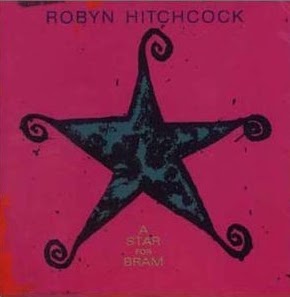
50. A Star for Bram


50. A Star for Bram, Robyn Hitchcock (Editions PAF!, 2000)

The Aughts began slowly for veteran British songwriter Robyn Hitchcock.  His Warner Bros. contract ended after three albums (including Mossy Liquor, the vinyl-only companion piece to his Moss Elixir album, both ’96), leaving him without major-label support for the first time since ’86.  Between ’00 and ’03 he quietly issued three albums on his own Editions PAF! label.  This trio included Robyn Sings, a live double album composed entirely of Bob Dylan covers, much of which had previously appeared as an extended appendix to the Warner-issued, promo-only ’97 single for his song Beautiful Queen.  The recycling of promo-only B-sides following the loss of a contract might seem an inauspicious move, were the performances not strong, sought-after material likely rejected for full release by Warner.  Two years before Robyn Sings, though, slipped another unusual album, A Star for Bram.  Released “under special license from Warner,” it arrived with the feel of a fan-club album and cover art almost replicating that of Jewels for Sophia (’99), his final Warners album.  Often diminished as a mere collection of Sophia outtakes, Bram indeed includes two songs that appeared on the Warner-issued, Sophia-supporting promotional EP entitled Rare Jewels.  While the Aughts would be Hitchcock’s most prolific decade, A Star for Bram was just one of a string of albums from the decade comprising outtakes, old material, or other oddities while masquerading as new releases.  A Star for Bram is unique among its colleagues, however, as it is arguably stronger than any of the four “real” new LPs that Hitchcock issued in the Aughts.

Bram is a tempered, darker sibling to Jewels for Sophia.  The Warner album is bright, often raucous, and comical; one can almost imagine a Warner executive opting against Bram’s less immediate songs and saying, “We want the funny songs, the ones where you talk about vegetables a lot.”  While the two albums’ most haunting song (No, I Don’t Remember Guildford) does appear on Sophia and Bram is not devoid of levity, Bram is the more subdued record.  It opens with two understated acoustic numbers; the second, the gently shimmering I Saw Nick Drake, is like a transcription of a dream, with Hitchcock meeting the long-dead British folksinger, doing chores together, and interacting in the surreal ways that only the subconscious can manifest; it is built on a transfixing repeated guitar figure and joined by Hitchcock’s highly reverbed wordless humming between the verses.  Judas Sings (Jesus and Me) and I Used to Love You are both stripped-down ballads, the latter using only voice and piano.  Bram’s electric numbers outnumber the unplugged entries, but these, too, are largely subdued.  A minimal, sax-tinted groove supports the skeletal boogie of Adoration of the City; the mild skiffle of The Philosopher’s Stone features just Jon Brion and Hitchcock, the latter adding melodic accents with a “harmony machine.”  The record’s two expository highlights are Nietzsche’s Way, its title punning on Spirit’s 1970 song Nature’s Way, and a new studio recording of Hitchcock’s nostalgic travelogue 1974, which previously appeared on the ’98 in-studio live soundtrack Storefront Hitchcock.  A final thread connecting the album to Jewels for Sophia is a dub version of that album’s Antwoman that gives the lilting original an ominous tint.  Hitchcock’s departure from the major-label system may have resulted in a circuitous new pattern of record-making, but as long as his catalog continues to generate albums as reliable as A Star for Bram it will be worth following.

Highlights: 1974, Daisy Bomb, Nietzsche’s Way, I Saw Nick Drake

Sublime bit: Those spectral, wordless choruses of I Saw Nick Drake.

Read the NOYOUCMON mission statement here.

Tuesday, August 3, 2010

54. Dark Days/Light Years


54. Dark Days/Light Years, Super Furry Animals (Rough Trade, 2009)

The eighth album by Welsh quintet Super Furry Animals, Hey Venus! (’07; see #65), was the psych-pop group’s first on the Rough Trade label.  Its streamlined blast of uptempo glam and the odd lovely ballad came at the new label’s behest, hoping for a return to the efficient vibe of the group’s ’90s work.*  The tour that followed the album’s release was another stripped-down affair, the band cutting back on the props and stage dressing that made previous jaunts quasi-theatrical affairs.  The willingness to tailor an LP to a record company’s desires might have been an ominous sign had the result not been one of the group’s most enjoyable records to date.  Following Hey Venus!, drummer Daf Ieuan released his first album with side project the Peth and frontman Gruff Rhys issued Stainless Style, a collaboration with producer/programmer Boom Bip, credited to Neon Neon and ostensibly a concept record about eccentric automotive engineer John DeLorean.  These solo detours, both on other labels, were evidence that Rough Trade would not strong-arm the band or its members into a specific vision.  When the Super Furries regrouped to record their ninth LP, the sessions would culminate in their most stretched-out, challenging vision yet.

At just over an hour, Dark Days/Light Years is practically twice as long as Hey Venus! and the longest SFA album to date; on vinyl, it is a double LP (though running at 45 RPM) whose garish artwork—a collaboration of the group’s two previous art designers, Keichi Tanaami and Pete Fowler—sprawls across both sides of its gatefold jacket and a two-sided 24x24 poster.  While its predecessor opened with a rollicking 43-second introductory theme, Dark Days slowly gurgles its way to the surface.  Opening cut Crazy Naked Girls begins with 51 seconds of muffled speech, the sounds of tuning up, and a false start before an overdriven drum beat kicks in, followed by a clipped, nearly falsetto Rhys vocal recalling Prince before abruptly changing at midpoint into an acid-rock blues jam that churns like an extended outro for the remainder of its six minutes.  Once through this virtual decoy the album returns to more conventional songwriting, soon making it clear that Dark Days is a groove-heavy affair. Several songs (most notably Moped Eyes and the nuttily titled The Very Best of Neil Diamond) are propelled by slinking arrangements worthy of the dance floor, even if the tempos remain at a low simmer.  The eight-minute Cardiff in the Sun is the album’s centerpiece, its Kosmische chillout groove giving way to blissful choruses consisting of its repeated title.  The album’s extended runtime means there is enough room for a handful of pop tunes, the best among them the pulsing jack-in-the-box rhythm of Inaugural Trams whose middle eight consists of a rap, in German, by Nick McCarthy of Franz Ferdinand.  Against all odds, it is one of the album’s best moments.  Another key pop track finds guitarist Huw Bunford taking lead vocals, the hideously titled yet wonderfully catchy White Socks/Flip Flops.  The record ends as oddly as it began, though, with the ten-minute Pric, a throbbing rock groove that trails off at roughly six minutes for an extended ambient coda.  A daunting listen on first blush, the album contains all the hallmarks that make Super Furry Animals one of the most inventive and charming pop groups of their time.  While not as immediate as their previous works, Dark Days/Light Years sustains repeated plays better than most of the band’s catalog once its rhythmic secrets are unlocked.

*For just one account of the Rough Trade request, see this Gruff Rhys interview: http://www.tinymixtapes.com/features/gruff-rhys-super-furry-animals

Highlights: Inaugural Trams, Inconvenience, The Very Best of Neil Diamond, Moped Eyes

Sublime bit: When Inaugural Trams slams back into its peppy groove after Nick McCarthy’s spoken guest vocal ends at 3:24.

Read the NOYOUCMON mission statement here.

Saturday, July 31, 2010

55. Trouble in Dreams


55. Trouble in Dreams, Destroyer (Merge, 2008)

By the time of his final full-length album of the decade, Vancouver singer-songwriter and Destroyer bandleader Dan Bejar had come a long way from the four-track adventuring of his ’90s work.  The Aughts saw Bejar release six Destroyer full-lengths and a pair of EPs, as well as four albums as a member of the New Pornographers and two with Swan Lake (see #91).  Even just since his previous Destroyer album, the ’06 breakthrough LP Destroyer’s Rubies, Bejar made substantial contributions to four different groups’ records, including performing the bulk of instrumentation on girlfriend Sydney Vermont’s ’08 album (credited to Hello, Blue Roses) The Portrait Is Finished and I Have Failed to Capture Your Beauty.  If one looks only at the Destroyer material produced in the Aughts, the catalog reveals a series of ambitious and complex works: from his first masterwork Streethawk: A Seduction (’01, see #66) to the bold musical theater of the synth-heavy ’04 Your Blues and beyond, Bejar has repeatedly shown himself to be one of the decade’s strongest and most literate songwriters.  His prolificacy and willingness to work as a secondary on other people’s albums have afforded him an ongoing opportunity to hone his writing and performance, and a sequential examination of his Aughts output also shows one of the decade’s most significant progressions in pop craftsmanship.

Trouble in Dreams came after a sequence of Destroyer albums sprawling in construction or thematic in execution; while its running time almost matches the nearly hour-long Rubies, Bejar’s ’08 effort feels like the first streamlined collection of Destroyer songs since Thief in 2000.  While Bejar and Destroyer may seem synonymous, the project has been a group effort since ’98; its lineup has shifted progressively, though, and Trouble marks the first time in six years that Destroyer’s roster survived nearly intact from its previous record.  Only longtime drummer Scott Morgan is missing, replaced here by Fisher Rose (who played vibes and trumpet on Rubies).  As with most of Destroyer’s albums, Trouble was recorded at Vancouver’s JC/DC Studio with David Carswell and Paul Collins co-producing with the band, the latter one of Bejar’s New Pornographers bandmates.  The album’s production is warmer than any of its predecessors, a departure from the ragged live feel of Rubies; most of its songs are slow-burning, sometimes almost sensuous ballads.  The subjects often seem burdened by fatigue, concession, and a wish to get things over with; the album’s opening line is “Okay, fine,” the narrator of Blue Flower/Blue Flame concluding “A gray ashen sadness rises like the sun, oh well.”  My Favorite Year recalls halcyon days before a blunt reminder that “now it’s gone.”  The protagonist of Shooting Rockets, the album’s eight-minute centerpiece, whose “soul pukes,” finds lightness only in dreams because he has “street despair carved in my heart.”  These songs are cloaked in bewitching arrangements that temper the gritty accountings of the lyrics.  The State and Plaza Trinidad provide noisy interludes, delivering percussive crescendoes that provide sonic reminders of the characters’ emotional stress.  Only on My Favorite Year and Dark Leaves Form a Thread does the mood approach ebullience; even then, though, the narrator is ambivalent: “No, it’s cool, you go, I’ll stay,” Bejar sings on the latter, “perfectly at home with this dread.”  On its lyrical surface a potential gloom trip, Trouble in Dreams is Destroyer’s most sonically beautiful album and another gem in the catalog.

Highlights: My Favorite Year, Dark Leaves Form a Thread, Rivers, Introducing Angels

Sublime bit: Introducing Angels: its lush arrangement, Bejar’s hushed intonation of its title, and the silvery guitar riff slipping through its choruses.

Read the NOYOUCMON mission statement here.

Thursday, July 22, 2010

57. Truelove's Gutter


57. Truelove's Gutter, Richard Hawley (Mute, 2009)

Sheffield songwriter Richard Hawley—former Longpigs guitarist and Pulp sideman—is one of those trusty musicians whose excellence comes from finding a suitable niche and treading that same ground over a span of albums, each of which has its strengths yet may seem interchageable to the casual listener.  His solo material focuses on sentimental lyrics set to lush, old-fashioned pop arrangements that suggest a common ground between Buddy Holly’s orchestral work; the early rock material on Sun Records of the Elvis, Scotty & Bill trio; and jazz-pop singers like Nat “King” Cole and Johnny Hartman.  After a mini-album and four full-lengths, including the Mercury Prize nominee Coles Corner (’06; see #84), Hawley adjusted his formula to produce his most masterful work of the decade.

The follow-up to Hawley’s poppiest album to date, Lady’s Bridge (’07), Truelove’s Gutter is a departure from the post-war dance-band crooner material that made helped to make his previous two albums so enjoyable.  Here, Hawley does not abandon his proven form so much as he dials it down and stretches it out; this results in some of the most intimate, quiet material of his catalog as well as its most epic numbers.  Hawley had done quiet material before—the bulk of ’02’s Late Night Final and the final third of Coles Corner focus on hushed, sparse compositions—yet on Truelove’s Gutter the calmness takes the form of meditations.  Expanding on Hawley’s usual beat-combo instrumentation, the songs are accented by a bevy of unusual, sometimes arcane devices: a singing saw, the cristal bachet, a glass harmonica, the waterphone, Tibetan singing bowls, the Ondes martenot (the sole electric instrument of that lot, an early keyboard producing theremin-like vibrations).  This non-traditional accompaniment lends a unique sonic undercurrent to the record; when the opening cut As the Dawn Breaks slowly builds from a swelling ambient hum, to name one instance, the organic instruments can easily be mistaken for modern electronics.  Many songs on the album have extended run times, the average going over six minutes.  Two pieces, Remorse Code and Don’t You Cry, are ten minutes long.  Remorse Code is the album’s centerpiece; a ruminative, opaque depiction of drug addiction, it caresses a single, gentle riff for its duration.  “The ship is wrecked/With all hands/Look to the reef/False lights from the land,” Hawley sings; the capsizing metaphor ends bluntly with a haunting chorus of “Those white lines/made your eyes wide.”  No mere indictment of another person’s follies, its lyric concludes with “I was likewise/In those white lines.”  Don’t Get Hung Up in Your Soul is the most desolate number, Hawley accompanied by an almost inaudible guitar and bass with the singing saw adding a far-off and lonesome tone.  The album’s general quietude emphasizes the power of its occasional crescendo: the blazing orchestral swell that erupts in the fourth minute of the otherwise quiet Soldier On, for example, is the album’s most stunning moment in part because it happens only once.  The songs of Truelove’s Gutter strip the bulk of filigrees from Hawley’s proven approach to pop songwriting, leaving its compositions laid bare.  Sometimes almost painfully frank yet thoroughly compelling precisely because of its intimacy, this fifth full-length album of Hawley’s is a striking achievement that will long resonate as a peak of his career.

Highlights: Remorse Code, Open Up Your Door, Soldier On, For Your Lover Give Some Time

Sublime bit: Those knowing refrains of Remorse Code and the mournful guitar solos surrounding them, especially the one from 5:34 to 7:33.

Read the NOYOUCMON mission statement here.

Sunday, July 4, 2010

61. Olé! Tarantula


61. Olé! Tarantula, Robyn Hitchcock and the Venus 3 (Yep Roc, 2006)

London-born songwriter Robyn Hitchcock has maintained a prolific solo career since leaving new-wave psych-poppers the Soft Boys in 1980.  Issuing some three dozen albums, half of those being studio efforts and the rest comprising outtakes, radio sessions, live gigs, and revisitings of old work, Hitchcock has developed a devoted following while consistently delivering engaging new material.  A certified English eccentric, Hitchcock built a reputation for unorthodox lyrics about vegetables, insects, and other such matter, though it is unfair to categorize him as a strict humorist or capable only of idiosyncratic composition.  His quick-witted, picturesque writing makes him a natural descendant of influences Bob Dylan and John Lennon, and he has a knack for fragile beauty as much as for spirited, assertive pop music.  While he began the Aughts with a dismissal from Warner Bros., leaving him without a major-label deal for the first time since the late Eighties, it would be his most prolific decade, producing six studio albums, another six of live material and/or outtakes, two comprehensive box sets of his ’80s solo work, as well as a Soft Boys reunion album, accompanying EP, and an exhaustive reissue of their ’80 LP Underwater Moonlight.

Hitchcock’s ’06 studio album Olé! Tarantula, his sixteenth not counting Soft Boys material, finds him recording with a dedicated group for the first time since the ’93 disbanding of his backing group the Egyptians.*  The Venus 3 features several well-known Seattle-based musicians: longtime collaborator Peter Buck on guitar, R.E.M. touring drummer Bill Rieflin (also late of numerous industrial groups including Ministry, KMFDM, and Pigface), and Scott McCaughey of the Young Fresh Fellows and the Minus 5 (the latter of which has also included Rieflin).  The album also features among its numerous guest spots contributions from former Soft Boys Kimberley Rew and Morris Windsor.  Most of Hitchcock’s previous Aughts work is reserved, acoustic music; stripped-down records like Luxor (’03) and Spooked (’04, his first on now-longtime label Yep Roc) are enjoyable, but are not among his most memorable efforts.  Olé! Tarantula is, conversely, his most electrified album since his work with the Egyptians.  It opens with two numbers that recall the finest of his ’80s pop heyday.  The hard-edged Adventure Rocket Ship juxtaposes a yearning lover with cosmic detritus like “skeletons of spacemen” and time-warp romance (“I kiss you in the past”); next is Underground Sun, a summery pop blast whose sound masks its lyric about a deceased friend (“You lie so lonely/Listening to the silence of the graves/You don’t belong there/You belong down south among the waves”).  A third pop blowout comes with ’Cause It’s Love (Saint Parallelogram), written with reclusive XTC frontman Andy Partridge yet unfortunately not boasting a guest appearance from its co-author.  Reprised from the Japan-only ’05 odds-and-ends LP Obliteration Pie is (A Man’s Gotta Know His Limitations) Briggs; despite a new arrangement with an incongruous synth line, the Tarantula version remains an album highlight.  The album’s closing song is its most haunting; N.Y. Doll is a moving account of the troubled last years of New York Dolls bassist Arthur Kane.  Olé! Tarantula is a contender for Hitchcock’s best work of the decade; those craving more should seek out its companion EP Sex, Food, Death...and Tarantulas, which features live versions of Briggs and five other tunes from Hitchcock’s deep catalog.

* Or fifteenth, to those who insist on categorizing his 2000 LP A Star for Bram as a mere set of outtakes from the '99 Jewels for Sophia album.  I maintain otherwise.

NOTE: As a proponent of wax, it pains me when I cannot recommend a vinyl pressing of an album; however, the vinyl pressings produced by Yep Roc are routinely substandard.  Overzealous bass response, muddy mastering, and general poor fidelity render this label's releases best purchased on the compact disc format.  I've heard both versions of Olé! Tarantula, and the CD trounces the vinyl version.  If you do not care about fidelity, purchase a download of this album.  The vinyl receives a NOYOUCMON "do not buy" warning.

Highlights: Underground Sun, Adventure Rocket Ship, N.Y. Doll, (A Man’s Gotta Know His Limitations) Briggs

Sublime bit: Underground Sun’s pulsing bridge (“One for the girl who went away/Two for the girl that went astray/Three is in between you”).
 
Read the NOYOUCMON mission statement here.

Tuesday, June 29, 2010

62. Year of Meteors


62. Year of Meteors, Laura Veirs (CD version) (Nonesuch, 2005)

Colorado-born Laura Veirs, a self-confessed latecomer even to listening to music, fooled around in a college punk band before turning to songwriting as a distraction during an unhappy geology expedition to China.  This composition foray resulted in a pair of self-released albums, beginning with a ’99 eponymous LP after a relocation to Seattle.  Veirs’s music is rooted in folk stylings, with the occasional western twang; her coarse first record features just vocals and acoustic guitar.  Her singing voice has an unvarnished quality much like the naïf sing-speak of Liz Phair’s early work yet with the timbre of Suzanne Vega.  Also like Vega, who grew from straight folk to the complex electronic tapestry of the ’92 LP 99.9F°, Veirs expanded her sonic palette over successive albums.  The instrumentation is augmented with each outing, first with double-tracked vocals, banjo, and mild effects; for ’03 third album Troubled by the Fire, a full band is added, with electric guitar, horns and woodwinds, keys, and strings; eventually, electronics would become a prominent part of her sound.  Veirs’s early work earned considerable attention, resulting in a guest spot on three Troubled tunes by veteran guitarist and composer Bill Frisell, who also grew up in Colorado.  By her fourth LP, Veirs would have a major contract, becoming label mates with Frisell on the Warner-distributed Nonesuch Records.  Carbon Glacier (’04), her first Nonesuch effort, is sparse and ghostly, its aura matching the dark, wintry landscape of the etchings on its jacket.  The folk tunes therein are accented with spectral, minimal electronics.  The backing band, dubbed the Tortured Souls and featuring drummer, accomplished producer, and future Veirs husband Tucker Martine, would serve on the remainder of Veirs’s Aughts catalog.

Fifth album Year of Meteors is populated by confident, hard-edged pop arrangements, a departure from Veirs’s previous folk-heavy releases.  Opening cut Fire Snakes begins with a gentle acoustic guitar pattern, Veirs eventually joined by simmering electro percussion, atmospheric guitar overdubs, and reverb-laden viola, creating an understated, glimmering vibe.  Galaxies features a downbeat rock arrangement with a playful, oscillating synth line running throughout.  Secret Someones is the most brisk number, its verses and choruses propelled by an insistent drumbeat and pulsing, double-tracked Veirs backing lines accompanying her main vocal.  Like the ’06 Sonic Youth song Or (see #74), it climaxes with an excitable music fan’s series of questions: “Tell me/Did you make it to the show?/Tell me/What did you make of the drummer’s hair?/Tell me/About the atmosphere/Tell me/About the faces that greeted you there.”  Parisian Dream is carried by a powerful drumbeat and vibrant viola figure; like the more delicate Spelunking, it uses a lighted lamp as a metaphor for a lover’s warmth.  Though Veirs’s arrangements have become more complex, the album has its share of acoustic ballads; the finest, and the album’s most entrancing song, is Where Gravity Is Dead.  To a stark accompaniment, Veirs sings of a willfully isolated figure who perplexes the narrator: “Don’t you wish for someone/To pull you on a string/Down from atmospheres/Down into a clearing/To kiss and box your ears?”  Saltbreakers (’07), her next and final Aughts album, lacks the allure of her other two Nonesuch releases; Year of Meteors, though, is an often enchanting career highlight and captivating expansion of Veirs’s sound.

NOTE: I prefer the CD version over the vinyl version issued by Kill Rock Stars, as the latter includes a different version of Galaxies that features a guest verse by Seattle rapper Specs One (the pseudonym-happy gent doing business here as "Kotos the Rock Thrower"), which Nonesuch declined to include on their version.  I hate to side with a major label when it comes to an artist's vision, but even the mellow groove laid down by Specs One—whose flow is, frankly, not the smoothest—is too much of an obtrusion for me when it comes to Laura Veirs music.  Take your pick of formats, but know what you're getting.

Highlights: Where Gravity Is Dead, Secret Someones, Parisian Dream, Rialto

Sublime bit: Those pulsating choruses of Secret Someones and Veirs’s murmured backing chant of “Hey/Hey/Hey/Hey” throughout the bridge.

Read the NOYOUCMON mission statement here.

Saturday, June 26, 2010

63. Bright Yellow Bright Orange


63. Bright Yellow Bright Orange, The Go-Betweens (Jetset, 2003)

Brisbane songwriters Robert Forster and Grant McLennan produced six studio albums from 1978-88 with their co-ed group the Go-Betweens, earning wide critical acclaim and an adoring fan base in Australia and the UK.  The group possessed a sparkling, jangling pop sound; more notable, though, was the two leaders’ songwriting and its uncanny ability to depict the mundane and invigorating aspects of romance, friendship, and everyday life and retain a masculine perspective without avoiding sensitive or feminine qualities.  The continual lack of commercial success proving frustrating, the band parted ways in ’89 and its two leaders went on to separate careers while remaining close friends.  Both delivered a handful of strong solo records in the ’90s.  They occasionally performed their group’s songs together as a duo, until deciding to fully revive the brand with a new Go-Betweens album in 2000.  For that effort, The Friends of Rachel Worth, Forster and McLennan created a new roster including Sydney bassist Adele Pickvance (with whom they had both worked) and, on drums, Janet Weiss of US indie group Sleater-Kinney (the other members of Sleater-Kinney guested, as did Sam Coombes from Weiss’s side project Quasi).  The album was a striking return to form and on par with their best work, revealing the Aughts-model Go-Betweens to be a vibrant concern.

Bright Yellow Bright Orange is the second of three Aughts Go-Betweens LPs, and the eighth overall.  The Sleater-Kinney contingent no longer present, Forster and McLennan are accompanied here by Pickvance and drummer Glenn Thompson (who played on Forster’s ’93 solo LP Calling From a Country Phone).  The songs have a less explicitly acoustic feel than those of its predecessor, though the albums do feel of one piece.  Bright Yellow opens with a pair of crisp rockers; Forster’s Caroline and I imagines the parallels between two unrelated people with the same birth year, in this case himself and Princess Caroline of Monaco (“It gave me something small I could feel/That maybe as you grew you knew how I’d feel”).  McLennan’s Poison in the Walls follows, and could almost be interpreted as an oblique nod to the Go-Betweens’ prior run (“There’s nothing more that’s new/And where’s that brilliant juice/The flame that fired your heart/That made you want to start.”)  In Her Diary recalls Forster’s previous quotidian character examinations like The Clarke Sisters (’87); the subject’s diligent record-keeping leaves her disconnected from her own memories, with nothing other than “Some kind of thing/That reminds her of a photograph/Of some people she’s known.”  In Mrs. Morgan, McLennan reprises a character from the song Trapeze Boy on his ’91 Jack Frost LP (a collaboration with Steve Kilbey of the Church).  Bright Yellow closes with two sparse ballads, first Forster's Something for Myself; “Trapped within an image/Unable to move,” its protagonist vows to “get a new strength” and move beyond his own hangups.  McLennan’s Unfinished Business closes the album with a tender, quiet gesture to an exhausted friend: “Are you gonna make it?”  Like all Go-Betweens albums, Bright Yellow Bright Orange is just a simple collection of outstanding yet unassuming rock-influenced pop songwriting; Forster and McLennan’s ability to produce such winning material nearly thirty years after their first single—while sounding as fresh as their younger contemporaries—illustrates their standing as one of the great songwriting teams of the Aughts.

Highlights: Caroline and I, Poison in the Walls, Old Mexico, Something for Myself

Sublime bit: Old Mexico’s choruses: “You were so excited/But you weren’t invited,” with shimmering acoustic guitar and Pickvance harmonies.

Read the NOYOUCMON mission statement here.

Wednesday, June 23, 2010

64. Two Against Nature


64. Two Against Nature, Steely Dan (Giant/Reprise, 2000)

It seemed nutty enough when, following some production collaborations, jazz-rock studio mavens Steely Dan regrouped for a ’93 concert tour to support frontman Donald Fagen’s then-current second solo LP Kamakiriad, playing their first shows since ’74 and making first use of the Dan name since their final (and weakest) album, the ’80 Gaucho.  The group, swollen with session players and dubbed “The Steely Dan Orchestra,” opened shows with a Muzak-style medley of Dan hits before easing into a set including tunes from Fagen’s and guitarist Walter Becker’s solo work.  This occasionally went beyond the sound of the group’s pristine, painstaking ’70s albums and into dullness, captured on the aseptic tour souvenir Alive in America (’95).*  Kamakiriad was a pale shadow of Fagen’s first solo effort, the excellent ’82 The Nightfly; and Becker’s debut solo turn, 11 Tracks of Whack (’94), is the abomination of the Dan cosmology.  Considering these inauspicious resurfacings, the notion of strong new Steely Dan product in the Aughts would have been a fool’s wager.  It would have been no stretch to imagine the routinely out-of-touch Grammys bestowing an award on the reunited pair, out of simple familiarity; it was one of the most shocking music-biz turns of the decade, then, when their 2000 reunion album Two Against Nature beat out hot items Eminem and Radiohead’s Kid A to win Album of the Year (and three other awards)—and actually deserve it.  For those who hadn’t heard the album, it was easy to presume this a Grammy blooper on the level of Jethro Tull’s notorious ’89 defeat of Metallica in the Hard Rock/Metal category; the reality, though, is that Two Against Nature is the best work from the Fagen/Becker camp since The Nightfly and the finest Steely Dan album since the 1977 classic Aja.

The reunion album’s main strength is its compositions.  Kamakiriad and Gaucho are both too heavy on forgettable numbers short on hooks, and their flawless studio craftsmanship and light-jazz habits push the lesser material into elevator-music territory.  Two Against Nature is impeccably played, courtesy of nearly thirty session musicians, yet its delivery is never dull.  The planning of a high-level prank in Gaslighting Abbie, the syncopated funk of the title track’s voodoo exorcism, and the exhilaration of an undoubtedly inappropriate romance in Almost Gothic provide compelling narratives.  Almost Gothic lends its enthralled narrator additional zing by giving each chorus a different lyric about the antagonist ingénue and an upward key change with each cycle.  The grind of everyday life punctuated by long-anticipated romantic moments dominates: What a Shame About Me finds an unfulfilled bookstore employee accidentally reconnecting with an old flame; in West of Hollywood the suburban narrator, whose regular life finds him “way deep into nothing special,” recalls “She reached out for my hand/While I watched myself lurch across the room.”  The naughty but good-natured romp Cousin Dupree scored its own Grammy songwriting award, though it does pale alongside its more nuanced companions here.  Steely Dan released only one more Aughts album, Everything Must Go (’03), yet toured for much of the decade focusing mainly on the classic ’70s material; two more solo LPs followed (Fagen’s ’06 Morph the Cat and Becker’s ’08 Circus Money, both improvements on their respective predecessors).  Each of these albums is adequate and will attract diehard fans; it is Two Against Nature, though, issued just two months into the decade, that holds up the best and delivers the finest material of the unexpected second incarnation of Steely Dan.

* I saw the group's Chicago-area gig in August 1993 and found it a largely soulless display of Dan-by-numbers.  Fagen explained in an interview at the time, when asked if playing his old songs stirred up any feelings, that he preferred to operate detachedly and with no emotional investment during the reunion gigs—if memory serves, he described his method as "laser thinking," though I can't track down the specific interview (which I recall as being in Musician magazine).  Steely Dan's press kits are awash with pranks and piss-takes, but even if this was another instance of intentional silliness it seemed to ring true during their initial comeback.

Highlights: Almost Gothic, Janie Runaway, Gaslighting Abbie, Two Against Nature

Sublime bit: Fagen’s delivery of Almost Gothic’s three different chorus lyrics, peaking at 3:15 with “First she’s all buzz/Then she’s noise-free.”
 
Read the NOYOUCMON mission statement here.