Showing posts with label CANADA. Show all posts

Thursday, November 6, 2025

35. This Night

35. This Night, Destroyer (Scratch Canada 2002; Merge US 2002)

This is a placeholder for an entry to come in my Top 125 Albums of the 2000s, which I selected at the end of 2009. This blog has been dormant since autumn 2010, and my intention is to finish the final 45 entries as originally selected despite the distant vantage point and my opinions having changed in the interim. 

Read the NOYOUCMON mission statement here


Friday, October 22, 2010

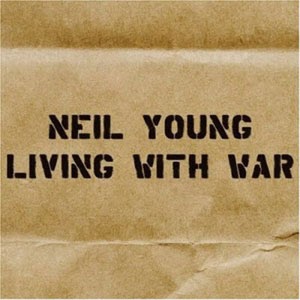
48. Living With War


48. Living With War, Neil Young (Reprise, 2006)

It was easy during the Aughts for even dedicated Neil Young fans to lose interest.  After his strong ’00 folk-rock outing Silver & Gold (see #75), Young released a stretch of work more ignominious than his much-maligned ’80s output.  The live Road Rock Vol. 1: Friends & Relatives (’00) was his fourth concert set in ten years, its arguable redundancy made worse by middling performances.  His long-awaited studio debut with Booker T. & the M.G.'s, Are You Passionate? (’02), was a passionless assortment of half-baked blues and painfully weak vocals; next came Greendale, a tedious 78-minute concept album short on melody that Young nonetheless felt warranted two separate editions.  During this parade of lackluster new material, Young waffled to the point of absurdity on his plans to release his long-promised Archives box set.  By the time the inoffensive but forgettable country-rock outing Prairie Wind arrived in ’05, NOYOUCMON had decided to retire from buying Neil Young albums.  Young’s next project proved so provocative, however, that even the most jaded fan was hard pressed to ignore it.  Angry to the point of despair about the seeming futility of the wars being fought in Afghanistan and Iraq, Young found inspiration in a newspaper article about in-flight surgery on military aircraft.  Within a matter of days, he’d written an album’s worth of material whose immediacy—in both speed of recording and in tone—made Living With War the most galvanizing example of music as news since Young recorded the song Ohio with Crosby, Stills & Nash not three weeks after the Kent State shootings in 1970.

The material’s sound hinges on aggressive, metallic guitar, making for Young’s most raucous LP since Mirror Ball, his ’95 collaboration with Pearl Jam.  Only bassist Rick Rosas and drummer Chad Cromwell accompany Young’s guitar on the core tracks (trumpeter Tommy Bray joins on two songs).  A week after recording, Young overdubbed a 100-voice choir on each song, amplifying the united-we-stand communal sentiment of the lyrical themes.  (Young released a separate edition of the album featuring the original unmixed tracks without the choir, titled Living With War—“In the Beginning.”)  The album is an unapologetic vivisection of the Bush administration and the mid-Aughts home-front climate; as shown in the ’08 tour film CSNY/Déjà Vu, its politics drove conservative fans to wish physical violence against Young.  The songs explicitly address the War on Terror, most famously in jaunty singalong Let’s Impeach the President with its strategic juxtaposing of self-contradictory soundbites from Bush speeches.  More than one song addresses Bush’s disingenuous ’03 “mission accomplished” speech.  Lookin’ for a Leader examines the possibilities for Bush’s replacement, presciently mentioning Obama nearly a year prior to his campaign announcement.  Angriest is The Restless Consumer, a gush of emotions from frustration with advertising fatigue and American ostentation versus Mideast poverty to post-9/11 fear and anxiety (“Don’t want no damned jihad/Blowin’ themselves away in my hood”) while suggesting that not all wartime problems are the enemy’s fault (“But we don’t talk to them/And we don’t learn from them”); each verse ends with a repeated chorus of “Don’t need no more lies.”  Those believing the album is anti-American need look no further than Families; its final chorus of “I just can’t wait to see you again in the USA” (recalling his ’80 song Hawks & Doves) is a declaration of the proud patriotism that Young, a longtime Canadian expatriate, feels for his adopted country.  While its subject matter ensures that many will never accept it as a valid artistic statement, Living With War was, after over five years of dwindling returns, much-desired testimony that Young’s creative well had not run dry.

Highlights: Families, The Restless Consumer, Lookin’ for a Leader, Let’s Impeach the President

Sublime bit: Young’s breathless indictment of pharmaceutical ads, jihadists, and flag-draped coffins in The Restless Consumer.

Read the NOYOUCMON mission statement here.

Saturday, July 31, 2010

55. Trouble in Dreams


55. Trouble in Dreams, Destroyer (Merge, 2008)

By the time of his final full-length album of the decade, Vancouver singer-songwriter and Destroyer bandleader Dan Bejar had come a long way from the four-track adventuring of his ’90s work.  The Aughts saw Bejar release six Destroyer full-lengths and a pair of EPs, as well as four albums as a member of the New Pornographers and two with Swan Lake (see #91).  Even just since his previous Destroyer album, the ’06 breakthrough LP Destroyer’s Rubies, Bejar made substantial contributions to four different groups’ records, including performing the bulk of instrumentation on girlfriend Sydney Vermont’s ’08 album (credited to Hello, Blue Roses) The Portrait Is Finished and I Have Failed to Capture Your Beauty.  If one looks only at the Destroyer material produced in the Aughts, the catalog reveals a series of ambitious and complex works: from his first masterwork Streethawk: A Seduction (’01, see #66) to the bold musical theater of the synth-heavy ’04 Your Blues and beyond, Bejar has repeatedly shown himself to be one of the decade’s strongest and most literate songwriters.  His prolificacy and willingness to work as a secondary on other people’s albums have afforded him an ongoing opportunity to hone his writing and performance, and a sequential examination of his Aughts output also shows one of the decade’s most significant progressions in pop craftsmanship.

Trouble in Dreams came after a sequence of Destroyer albums sprawling in construction or thematic in execution; while its running time almost matches the nearly hour-long Rubies, Bejar’s ’08 effort feels like the first streamlined collection of Destroyer songs since Thief in 2000.  While Bejar and Destroyer may seem synonymous, the project has been a group effort since ’98; its lineup has shifted progressively, though, and Trouble marks the first time in six years that Destroyer’s roster survived nearly intact from its previous record.  Only longtime drummer Scott Morgan is missing, replaced here by Fisher Rose (who played vibes and trumpet on Rubies).  As with most of Destroyer’s albums, Trouble was recorded at Vancouver’s JC/DC Studio with David Carswell and Paul Collins co-producing with the band, the latter one of Bejar’s New Pornographers bandmates.  The album’s production is warmer than any of its predecessors, a departure from the ragged live feel of Rubies; most of its songs are slow-burning, sometimes almost sensuous ballads.  The subjects often seem burdened by fatigue, concession, and a wish to get things over with; the album’s opening line is “Okay, fine,” the narrator of Blue Flower/Blue Flame concluding “A gray ashen sadness rises like the sun, oh well.”  My Favorite Year recalls halcyon days before a blunt reminder that “now it’s gone.”  The protagonist of Shooting Rockets, the album’s eight-minute centerpiece, whose “soul pukes,” finds lightness only in dreams because he has “street despair carved in my heart.”  These songs are cloaked in bewitching arrangements that temper the gritty accountings of the lyrics.  The State and Plaza Trinidad provide noisy interludes, delivering percussive crescendoes that provide sonic reminders of the characters’ emotional stress.  Only on My Favorite Year and Dark Leaves Form a Thread does the mood approach ebullience; even then, though, the narrator is ambivalent: “No, it’s cool, you go, I’ll stay,” Bejar sings on the latter, “perfectly at home with this dread.”  On its lyrical surface a potential gloom trip, Trouble in Dreams is Destroyer’s most sonically beautiful album and another gem in the catalog.

Highlights: My Favorite Year, Dark Leaves Form a Thread, Rivers, Introducing Angels

Sublime bit: Introducing Angels: its lush arrangement, Bejar’s hushed intonation of its title, and the silvery guitar riff slipping through its choruses.

Read the NOYOUCMON mission statement here.

Tuesday, June 15, 2010

66. Streethawk: A Seduction


66. Streethawk: A Seduction, Destroyer (Misra, 2001)

Much transpired between Vancouver singer/songwriter Dan Bejar’s ’95 demo tape submission to the Canadian Broadcasting Company’s experimental Brave New Waves radio show under the nom de plume Destroyer and the 2001 release of his fifth full-length collection, Streethawk: A SeductionBejar began with his earliest work to formulate the literary approach that would make him one of the decade’s most celebrated indie songwriters, yet efforts like We’ll Build Them a Golden Bridge (’96) and the cassette-only Ideas for Songs (’97) are middling juvenalia—fittingly issued on a vanity imprint dubbed Tinker—whose songs often sound less like compositions than the unplanned byproducts of learning how to use recording equipment.  After City of Daughters (’98), his first release to benefit from the help of other musicians, a professional studio, obviously deliberate craftsmanship throughout, and a modicum of distribution, Bejar branched out, collaborating with two other groups.  In 2000, he released albums with ex-Kreviss singer Sara Lapsley’s ebullient pop outfit Vancouver Nights (as guitarist) and ex-Zumpano frontman Carl Newman’s new group the New Pornographers (as songwriter and occasional lead vocalist).  These efforts redoubled the strength of Bejar’s primary project; while City of Daughters is a dramatic improvement over previous Destroyer works, it still contains a fair amount of tentative writing and has as many brief musical sketches as full-fledged songs.  Its follow-up, Thief, released the same autumn as the long-gestating New Pornographers’ debut, is a confident stride forward and the first exceptional Destroyer record.

As much of an improvement as Thief was, its ’01 follow-up Streethawk: A Seduction is an almost startling progression.  Recorded with the same five-man lineup as Thief and with bassist John Collins producing his third consecutive Destroyer album, Streethawk bests its predecessors in production, performance, and composition.  The labyrinthine, hyper-erudite lyrical style for which Bejar would become well known is in full flight here, each song a dense expository exercise.  Many of the arrangements are propelled by piano; along with Bejar’s emotive, high-pitched nasal croon, this lends the jauntier portions of the album a Tin Pan Alley feel.  Much of the album appears to address the music business.  “Express your bloated self/Willful and indignant/In the face of somebody’s lord,” he sings on the refrains of The Sublimation Hour, an abstruse depiction of relations with a label boss; English Music addresses the futility of a budding songwriter (“Write your English music/Though you know it will come to no good”).  A handful of the songs are primarily acoustic, especially on side two, but the album’s most sparkling moments come with the full band arrangements.  Bejar often peppers his lyrics with cultural references, frequently recontextualized so that they barely register as such; this is more prominent than ever on Streethawk.  A variety of bands, films, and other artists’ songs are addressed; the most dramatic instance comes in the extended coda of the seven-minute The Bad Arts with the repeated line “You got the spirit/Don’t lose the feeling,” paraphrasing the climax of Joy Division’s ’79 song Disorder.  A full analysis of the album’s allusions would require an essay of its own.  His final album before signing to Merge, the label that would remain his home into the Teens, Streethawk: A Seduction is an early Destroyer classic that established Bejar as a serious contender for indie rock’s songwriting crown.  Remastered and reissued by Merge in ’10 after a gap in availability, it is Bejar’s first essential work.

Highlights: The Sublimation Hour, Beggars Might Ride, The Crossover, Streethawk I

Sublime bit: When the guitar solo kicks in at 3:29 of The Bad Arts, presaging the vocal melody of the song’s Joy Division-quoting coda.

Read the NOYOUCMON mission statement here.

Sunday, May 16, 2010

75. Silver & Gold


75. Silver & Gold, Neil Young (Reprise, 2000)

When 2000 dawned, it had been over three years since the last Neil Young studio album--the longest gap of his 31-year solo career.  That record, the pleasingly disjointed ’96 Broken Arrow, came shortly after the death of Young’s friend and producer David Briggs; the two had worked together for 26 years.  A tour with Crazy Horse followed, along with the ’97 double-live Year of the Horse, as of this writing the last full release with his longtime backing band.*  He spent the rest of the ’90s working on two projects: Looking Forward, his first record with Crosby, Stills & Nash since ’88 and only their third studio LP since their ’70 debut; and his 25th solo album, Silver & Gold.  For his first Aughts release, Young returned to the acoustic stylings visited most recently on the ’92 Harvest Moon and several times before, most famously on his ’72 hit album HarvestHarvest loyalists tend to claim any country-leaning Young album as a sequel.  Emphasizing this suspicion for some is the appearance on Silver & Gold of the aforementioned albums’ steel guitarist Ben Keith and backup singer Linda Ronstadt; however, Ronstadt (along with fellow occasional Young collaborator Emmylou Harris) sings on only one song, Red Sun, and Keith’s return speaks not to a planned third part of Harvest but to Young’s tendency to keep a handful of backing bands that he rotates depending on the musical needs of his current project.  Another habit blurring his catalog’s lines is the return to old compositions when the time is right; for Silver & Gold, he revived a pair of unrecorded songs dating to ’82 (the title track) and ’84 (Razor Love), both of which he’d played live in the years since.**

The revisiting of songs almost twenty years old matches the album’s themes of reminiscing and reevaluation.  This is most explicit on Buffalo Springfield Again, the most upbeat number and a candid account of Young’s memories with that group in the late ’60s before their acrimonious breakup (“It ate us up/Now I ain’t sayin’ who was right or wrong”); hearing the group on the radio, Young imagines a reunion, stating “I’d just like to play for the fun we had.”  Parental love is addressed in two songs.  Daddy Went Walkin’ is a warm account of a father’s mundane activities and set of observations--the gathering of firewood, his corduroy pants and plaid shirt, riding in a car with a dog--concluding with an idealized depiction of the father’s love for the mother.  When not reminiscing, Young examines the solidification of existing relationships.  In Red Sun, Young’s narrator imagines a placid future with a lover, adding “I dreamt that my mama and daddy were there.”  Opening cut Good to See You describes reuniting with a lover, its title’s simple sentiment amplified by the deeper emotional resonance of a permanent homecoming.  Distant Camera asserts, “Life is changing everywhere I go/New things and old both disappear/If life is a photograph fading in the mirror/All I want is a song of love to sing to you.”  A line in Without Rings addressing communication failure--“My software’s not compatible with you”--was a howler in a pre-Web 2.0 society, yet resonates more keenly a decade later when so many relationships are mitigated online.  An ambling, amicable album, Silver & Gold was Young’s last strong release before a flaccid six-year stretch, a tender acknowledgment that love is our most precious asset.

* The 2003 album Greendale is credited to Neil Young and Crazy Horse, but does not include the entire group.  Crazy Horse guitarist Frank Sampedro did not participate due to Young's conclusion that the album required only one guitarist.

** Razor Love is shown on Silver & Gold credits as having a 1987 copyright date; bootleg recordings reveal performances of the song as early as 1984.

Highlights: Good to See You, Buffalo Springfield Again, Razor Love, Distant Camera

Sublime bit: The emotion in the verse endings of “I feel like I know what my life is for” and “I feel like making up for lost time” in Good to See You.
 
Read the NOYOUCMON mission statement here.

Saturday, March 27, 2010

91. Enemy Mine


91. Enemy Mine, Swan Lake (Jagjaguwar, 2009)

There is a temptation to call any meeting of individually accomplished musicians a supergroup.  If this is accepted, Swan Lake surely qualifies, if on a smaller scale than, say, Emerson Lake & Palmer.  What Swan Lake shares with the likes of ELP is a love for prog rock--not twenty-minute organ solos, but lapses from typical song structure and a penchant for fantastical, thespian lyricism.  The members come from a clutch of Canadian groups known as wordy, prog-leaning dramatists: Spencer Krug, frontman of Montreal’s Sunset Rubdown and co-leader of Wolf Parade; Carey Mercer, singer/guitarist for Victoria outfit Frog Eyes; and Vancouverite Dan Bejar, occasional lyricist and vocalist for the New Pornographers but most accomplished as the chief of Destroyer.  All have unusual voices.  Krug and Mercer are sometimes hard to distinguish, but Mercer’s voice is the more frantic stripe of tremulous melodrama.  Bejar’s voice is high and reedy.  In Swan Lake, they all take turns singing lead. They have relatively similar writing styles, and before their ’06 debut LP Beast Moans had worked together in various capacities.  Krug served on-and-off in Mercer’s Frog Eyes, and Bejar made an ’05 EP credited to Destroyer but using a Krug-less Frog Eyes as its backing band.  All of this cross-pollination makes collaboration obvious, and Swan Lake retains the feels of its members’ groups while shaping its own sonic identity.  It most closely resembles the swirling, avant-pop theatre of Sunset Rubdown, but is even more arcane and gothic (not goth); Bejar, the strongest lyricist, has in Swan Lake a more oblique template than usually afforded him in his other work, and Mercer’s twitchy, clamorous Frog Eyes outbursts are tempered by Swan Lake’s more deliberate pace.

But what of Enemy Mine, their second LP?  More focused and engaging than Beast Moans, it emphasizes the side project’s long-term viability.  Opening tune Spanish Gold, 2044 builds from a ragtag arrangement like a faltering New Orleans funeral procession into an ostentatious production finding Mercer name-checking Palinurus, Julliard, and Leonard Cohen’s Bird on a Wire before bellowing, “I left this bullwhip/On the nightstand” to Bejar’s wordless, gliding backing vocals.  This is heavy theatre.  One senses an aura of camp, particularly on Mercer’s tunes (the nutty cover art of a courtroom sketch is another giveaway to this triad’s strange humor).  Krug’s Settle on Your Skin is a hyper piano blast and the LP’s most upbeat number.  His second contribution here, Paper Lace, would appear three months later on Sunset Rubdown’s Dragonslayer LP, continuing a Swan Lake habit of blurring the boundaries between the side project and the primary group (Beast Moans included a tune that would reappear, dramatically rearranged, on Destroyer’s Trouble in Dreams LP; the Krug-penned Paper Lace also features the character Jackie, a name that haunts many Bejar compositions).  The album’s most stunning moment comes in Bejar’s Heartswarm.  It opens with a gently strummed acoustic guitar, a heavily reverbed but gentle drum cadence, and a delicate piano figure; Bejar then sings, “Do my eyes deceive me/Or is it truly springtime in Paris for that piece of shit?”  Bejar has a knack for injecting profanity into lyrics without gratuity, and this is about the finest example.  A willfully pretentious lark combining the quirks of three difficult, arty groups, Swan Lake is not for everybody.  Fans of its members’ other bands require these records, though, and at the Aughts’ end the best entry point for Swan Lake remained the perverse delights of Enemy Mine.
 
Highlights: Heartswarm, Paper Lace, Peace, Spider

Sublime bit: That first line of Heartswarm and its jarring, hilarious juxtaposition of the coarse with the lovely.
 
Read the NOYOUCMON mission statement here.