Showing posts with label US. Show all posts

Friday, November 7, 2025

26. Bachelor No.2


26. Bachelor No. 2, Aimee Mann (SuperEgo, 2000)

This is a placeholder for an entry to come in my Top 125 Albums of the 2000s, which I selected at the end of 2009. This blog has been dormant since autumn 2010, and my intention is to finish the final 45 entries as originally selected despite the distant vantage point and my opinions having changed in the interim. 

Read the NOYOUCMON mission statement here


29. Set 'em Wild, Set 'em Free


29. Set 'em Wild, Set 'em Free, Akron/Family (Dead Oceans, 2009)

This is a placeholder for an entry to come in my Top 125 Albums of the 2000s, which I selected at the end of 2009. This blog has been dormant since autumn 2010, and my intention is to finish the final 45 entries as originally selected despite the distant vantage point and my opinions having changed in the interim. 

Read the NOYOUCMON mission statement here

Wednesday, November 5, 2025

37. Merriweather Post Pavilion


37. Merriweather Post Pavilion, Animal Collective (Domino, 2009)

This is a placeholder for an entry to come in my Top 125 Albums of the 2000s, which I selected at the end of 2009. This blog has been dormant since autumn 2010, and my intention is to finish the final 45 entries as originally selected despite the distant vantage point and my opinions having changed in the interim. 

Read the NOYOUCMON mission statement here.


40. Is a Woman


40. Is a Woman, Lambchop (Merge, 2002)

This is a placeholder for an entry to come in my Top 125 Albums of the 2000s, which I selected at the end of 2009. This blog has been dormant since autumn 2010, and my intention is to finish the final 45 entries as originally selected despite the distant vantage point and my opinions having changed in the interim. 

Read the NOYOUCMON mission statement here.


41. Vampire Weekend


41. Vampire Weekend (XL, 2008)

This is a placeholder for an entry to come in my Top 125 Albums of the 2000s, which I selected at the end of 2009. This blog has been dormant since autumn 2010, and my intention is to finish the final 45 entries as originally selected despite the distant vantage point and my opinions having changed in the interim. 

Read the NOYOUCMON mission statement here.

42. Love and Theft


42. Love and Theft, Bob Dylan (Columbia, 2001)

This is a placeholder for an entry to come in my Top 125 Albums of the 2000s, which I selected at the end of 2009. This blog has been dormant since autumn 2010, and my intention is to finish the final 45 entries as originally selected despite the distant vantage point and my opinions having changed in the interim. 

Read the NOYOUCMON mission statement here.

Tuesday, November 4, 2025

43. Clap Your Hands Say Yeah

43. Clap Your Hands Say Yeah (self-released, 2005)

This is a placeholder for an entry to come in my Top 125 Albums of the 2000s, which I selected at the end of 2009. This blog has been dormant since autumn 2010, and my intention is to finish the final 45 entries as originally selected despite the distant vantage point and my opinions having changed in the interim. 

Read the NOYOUCMON mission statement here.


44. The Dirty South


44. The Dirty South, Drive-By Truckers (New West, 2004)

This is a placeholder for an entry to come in my Top 125 Albums of the 2000s, which I selected at the end of 2009. This blog has been dormant since autumn 2010, and my intention is to finish the final 45 entries as originally selected despite the distant vantage point and my opinions having changed in the interim. 

Read the NOYOUCMON mission statement here

45. You Are the Quarry


45. You Are the Quarry, Morrissey (Attack/Sanctuary, 2004)

This is a placeholder for an entry to come in my Top 125 Albums of the 2000s, which I selected at the end of 2009. This blog has been dormant since autumn 2010 and my intention is to finish the final 45 entries despite the distant vantage point and my opinions having changed in the interim.

Read the NOYOUCMON mission statement here.

Thursday, November 4, 2010

47. Hissing Fauna, Are You the Destroyer?


47. Hissing Fauna, Are You the Destroyer?, Of Montreal (Polyvinyl, 2007)

A person discovering Of Montreal via their breakthrough eighth LP Hissing Fauna, Are You the Destroyer? might not believe that they began as a lo-fi acoustic venture long on tedium and short on hooks.  Led by sole constant member Kevin Barnes, the Athens, Georgia-based group made five albums with ever-expanding lineups—’99’s The Gay Parade lists six full-time members and twelve contributors—before Barnes retreated to record two albums almost entirely by himself.  Satanic Panic in the Attic (’04) and The Sunlandic Twins (’05; see #68) were his strongest works to date, expanding on the earlier material’s fanciful concepts yet drab execution to produce a new sound flaunting complex, multi-tracked arrangements and borrowing heavily from ’60s-era psychedelic pop.  Though the albums became increasingly solo productions, the stage show evolved into a theatrical extravaganza with a dozen or more people on stage, usually in costume.  They managed to keep the spectacle from overpowering the music, and Barnes’s increasingly impressive songwriting and the band’s high-spirited performances made Of Montreal one of the most interesting working units of the late Aughts.

More compelling than the live show, though, is the density of Hissing Fauna’s songs in execution and lyrical content.  The quixotic, elaborate style of its two predecessors remains; but, the manic bubblegum of songs like Suffer for Fashion and Heimdalsgate Like a Promethean Curse are complemented by prominent servings of modern electro-funk.  Gronlandic Edit is built on a light, pulsing bass groove, and Bunny Ain’t No Kind of Rider has a slithering, smoky vibe; far beyond these dance-minded subtleties, though, is the flamboyance of Faberge Falls for Shuggie and Labyrinthian Pomp, both sung in an exaggerated, Prince-like falsetto that Barnes attributes to his alter ego Georgie Fruit, “a black man who has been through multiple sex changes.”*  While this persona affords Barnes’s lyrics a new aspect of sexuality, he uses no such guise to address the album’s most difficult material.  Much of Hissing Fauna is deeply personal, examining Barnes’s separation from his wife, a self-imposed temporary isolation in Norway, and reliance on antidepressants.  The album’s centerpiece is the twelve-minute The Past Is a Grotesque Animal, detailing the couple’s first meeting, courtship, and Barnes’s struggles with insecurity, progressing—all the while carried by a hypnotic, claustrophobic groove—to their tumultuous breakup; by its climax, Barnes is yelling “Let’s tear the fucking house apart/Let’s tear our fucking bodies apart!”  It is a chillingly naked dissection of private matters, intensified by the fact that the two reconciled and his wife plays on the album.  For all the costumes, playful gender experimentation, pop bliss, and jovial stage shows, the album often dares to forego metaphor to present some of the boldest self-analysis of the decade.  Barnes’s later attempts to outdo its ostentation and complexity resulted in a return to the muddled confusion of his earliest releases.  A dizzying album, at times even bipolar, Hissing Fauna is his high-water mark.

* See the November 2007 Barnes interview at http://pitchfork.com/features/interviews/7454-of-montreal/.

Highlights: The Past Is a Grotesque Animal, Heimdalsgate Like a Promethean Curse, She’s a Rejecter, Bunny Ain’t No Kind of Rider

Sublime bit: The “ooo-ooo-oooh” backing vocal that enters at 4:19 of The Past Is a Grotesque Animal and repeats for the next six minutes.

Read the NOYOUCMON mission statement here.

Friday, October 22, 2010

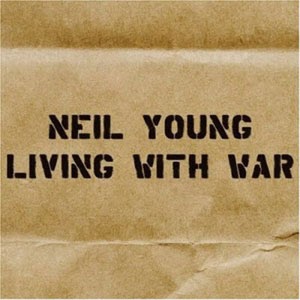
48. Living With War


48. Living With War, Neil Young (Reprise, 2006)

It was easy during the Aughts for even dedicated Neil Young fans to lose interest.  After his strong ’00 folk-rock outing Silver & Gold (see #75), Young released a stretch of work more ignominious than his much-maligned ’80s output.  The live Road Rock Vol. 1: Friends & Relatives (’00) was his fourth concert set in ten years, its arguable redundancy made worse by middling performances.  His long-awaited studio debut with Booker T. & the M.G.'s, Are You Passionate? (’02), was a passionless assortment of half-baked blues and painfully weak vocals; next came Greendale, a tedious 78-minute concept album short on melody that Young nonetheless felt warranted two separate editions.  During this parade of lackluster new material, Young waffled to the point of absurdity on his plans to release his long-promised Archives box set.  By the time the inoffensive but forgettable country-rock outing Prairie Wind arrived in ’05, NOYOUCMON had decided to retire from buying Neil Young albums.  Young’s next project proved so provocative, however, that even the most jaded fan was hard pressed to ignore it.  Angry to the point of despair about the seeming futility of the wars being fought in Afghanistan and Iraq, Young found inspiration in a newspaper article about in-flight surgery on military aircraft.  Within a matter of days, he’d written an album’s worth of material whose immediacy—in both speed of recording and in tone—made Living With War the most galvanizing example of music as news since Young recorded the song Ohio with Crosby, Stills & Nash not three weeks after the Kent State shootings in 1970.

The material’s sound hinges on aggressive, metallic guitar, making for Young’s most raucous LP since Mirror Ball, his ’95 collaboration with Pearl Jam.  Only bassist Rick Rosas and drummer Chad Cromwell accompany Young’s guitar on the core tracks (trumpeter Tommy Bray joins on two songs).  A week after recording, Young overdubbed a 100-voice choir on each song, amplifying the united-we-stand communal sentiment of the lyrical themes.  (Young released a separate edition of the album featuring the original unmixed tracks without the choir, titled Living With War—“In the Beginning.”)  The album is an unapologetic vivisection of the Bush administration and the mid-Aughts home-front climate; as shown in the ’08 tour film CSNY/Déjà Vu, its politics drove conservative fans to wish physical violence against Young.  The songs explicitly address the War on Terror, most famously in jaunty singalong Let’s Impeach the President with its strategic juxtaposing of self-contradictory soundbites from Bush speeches.  More than one song addresses Bush’s disingenuous ’03 “mission accomplished” speech.  Lookin’ for a Leader examines the possibilities for Bush’s replacement, presciently mentioning Obama nearly a year prior to his campaign announcement.  Angriest is The Restless Consumer, a gush of emotions from frustration with advertising fatigue and American ostentation versus Mideast poverty to post-9/11 fear and anxiety (“Don’t want no damned jihad/Blowin’ themselves away in my hood”) while suggesting that not all wartime problems are the enemy’s fault (“But we don’t talk to them/And we don’t learn from them”); each verse ends with a repeated chorus of “Don’t need no more lies.”  Those believing the album is anti-American need look no further than Families; its final chorus of “I just can’t wait to see you again in the USA” (recalling his ’80 song Hawks & Doves) is a declaration of the proud patriotism that Young, a longtime Canadian expatriate, feels for his adopted country.  While its subject matter ensures that many will never accept it as a valid artistic statement, Living With War was, after over five years of dwindling returns, much-desired testimony that Young’s creative well had not run dry.

Highlights: Families, The Restless Consumer, Lookin’ for a Leader, Let’s Impeach the President

Sublime bit: Young’s breathless indictment of pharmaceutical ads, jihadists, and flag-draped coffins in The Restless Consumer.

Read the NOYOUCMON mission statement here.

Saturday, September 25, 2010

49. OOOH! (Out of Our Heads)


49. OOOH! (Out of Our Heads), Mekons (Quarterstick, 2002)

Formed as a punk trio at the University of Leeds in ’77 before a reinvention in the mid-’80s as a more nuanced, expanded unit exploring British folk and American country music through a lens of sardonic and literary commentary, the Mekons have recorded regularly since their inception, with only the Fall matching their continuity and longevity.  Much like the Fall’s Mark E. Smith, the Mekons have demonstrated an acute if sometimes ambiguous socio-political consciousness; for the Mekons, this often operates out of time.  Anyone expecting their fifteenth LP, OOOH!, to be a direct analysis of the new post-9/11 world, then, may be confused to instead find a set of songs that opaquely invoke ritual, myth, and dissent from present-day England to the pagan sects of the pre-Saxon wilds.  OOOH! began as an art show of the same name—the bulk of Mekons are also visual artists—revolving around, well, heads. History and mythology contain a slew of famous heads: the decapitated ones of Anne Boleyn, John the Baptist, and Jayne Mansfield; the allegedly frozen one of Walt Disney; the beguilingly poisonous one of Medusa; and a garden variety of various types of heads—shrunken, floating, missing; decorative heads placed on buildings as sentinels or superstition; the mo’ai stone heads of Easter Island. The songs of OOOH! use these stories as inspiration.

Thee Olde Trip to Jerusalem opens the album with a ghostly intonation of its title’s acronym that sounds like a wolf’s howl.  Clattering percussion strikes up and Jon Langford directs a call-and-response group vocal.  “The sword is sharp/the arrow swift/the witnesses all seeing,” he sings, the rough-hewn arrangement suggesting a band of battle-worn troubadours heading for their final confrontation.  The possibility of death is clear, of it resulting in “two brass farthings on my eyelids,” as sung in This Way Through the Fire, but as members of the Commonwealth-era radical groups listed in Thee Olde Trip to Jerusalem would tell you, such is the risk of fighting for one’s cause.  Much of the album addresses the solitude and introspection possible in the midst of such communal activity.  In Bob Hope & Charity, the ragged-band sing-along continues although the story is of a flagging comrade hoping for telepathic connections with his mates.  Tom Greenhalgh sings a version of traditional folk song Lone Pilgrim, about a private epiphany about redemption of the righteous.  Susie Honeyman’s sad violin accompanies Sally Timms as she admits on the album’s quietest track, Hate Is the New Love, “how we still love the war” and “When we say we’ve had enough/We know we really want more.”  Winter, with a largely acoustic but boisterous and ramshackle arrangement featuring harmonica, fiddle, Turkish saz, and prominent tambourine, shows optimism for calmer times after a pagan winter spent naked and drunk “in the belly of the beast.”  The first verse of the Greenhalgh-led Only You and Your Ghost Will Know addresses a lonely traveler whose friends have died; in the second verse, he himself has frozen to death on the road.  The album’s downbeat denouement, Stonehead, closes the proceedings with a reminder that one day, like the frozen traveler, “our memory will vanish from the memory of the world.”  Its concepts may be less immediate than those of other Aughts-model Mekons albums (see #83 and #104), but the rewards of OOOH! are lasting and it is the always engaging group’s strongest album of the decade.

Highlights: Thee Olde Trip to Jerusalem, Only You and Your Ghost Will Know, Winter, Bob Hope & Charity

Sublime bit: When the title chorus of Ghost kicks in after the group vocal of “First the chill and then the stupor/Then the letting go.”

Read the NOYOUCMON mission statement here.

Saturday, September 4, 2010

52. Monsoon


52. Monsoon, Preston School of Industry (Matador, 2004)

Scott Kannberg, AKA Spiral Stairs, co-founder and guitarist of Stockton, California-based erudite slacker kings Pavement, owned a sizeable batch of unfinished material after the band’s embittered ’99 dissolution.  Author and singer of fewer than a dozen of the group’s nearly two hundred songs, Kannberg brought a more linear lyrical style to Pavement that countered frontman Stephen Malkmus’s penchant for stream-of-consciousness wordplay.  Freed of the limitations of his former group, Kannberg was the only member aside from Malkmus to release solo material in the Aughts (bassist Mark Ibold worked with Free Kitten and Sonic Youth, but issued no material of his own).  In ’01, Kannberg released the EP Goodbye to the Edge City on his own Amazing Grease label; rather than use either his given or stage name, he named his new project Preston School of Industry after a notorious boys’ reform school near his hometown of Stockton.  Edge City is an engaging set of five songs ranging from the good-natured acoustic shuffle of Somethings Happen Always, with a horn part and, on the coda, a children’s chorus; to the muted introspection of How to Impress the Goddess Pt. 2; to the pop rave-up The Spaces in Between, the most ebullient track to come out of the Pavement organization thus far.  Kannberg would expand on these forms with the first PSOI full-length, All This Sounds Gas (also ’01).  The most striking aspect of Kannberg’s new music was its apparent sincerity, devoid of the sarcasm and brattiness that lent Pavement an aggravating charm yet ensured their sizeable catalog would be short on guilelessness.

The second PSOI album, Monsoon, is an even more affable outing than its predecessor.  A shorter, breezier affair, Monsoon is built on the twangy acoustic-guitar jangle seen on parts of Edge City.  Opening cut The Furnace Sun and mid-album highlight Her Estuary Twang are bright pop blasts with cheerful wordless choruses and bountiful hooks; the charming Walk of a Gurl ambles more slowly than its poppier cousins and includes a whimsical harmonica accompaniment.  So Many Ways is almost a country ballad, its gentle pedal-steel drift giving the album its most peaceful moment.  Line it Up most directly recalls Kannberg’s Pavement work (specifically his Hit the Plane Down from Crooked Rain, Crooked Rain), with its slanted, cyclical riff and hectoring vocal.  Guests on Monsoon include Scott McCaughey of the Minus 5, who plays mandolin on two tracks, and four members of A Ghost Is Born-era Wilco on the track Get Your Crayons Out!  Monsoon would be the final recording of the Aughts to bear the Preston School of Industry name.  In ’09, Kannberg reclaimed his Pavement-era stage name Spiral Stairs when he issued the LP The Real Feel.  Promotional activities for the album, a glossier and mildly bluesy effort than the loose grooves of PSOI, were interrupted by the unlikely—and wildly popular—reunion of Pavement.  While Kannberg’s solo efforts have been largely overshadowed by Malkmus’s, all have merits; Monsoon is the most pleasing of his three solo full-lengths and one of the most agreeable works in the Pavement family tree.  (The Australian Monsoon on Trifekta Records came with a second disc titled Live in Chicago 2002 Bootleg from a tour supporting Wilco.  This audience-quality recording is now more widely available via download, and is frequently mislabeled as coming from a 2003 concert.)

Highlights: Her Estuary Twang, The Furnace Sun, Caught in the Rain, If the Straits of Magellan Should Ever Run Dry

Sublime bit: The blissful exclamations of “ba-da-ba” on the choruses of Her Estuary Twang.

Read the NOYOUCMON mission statement here.

Sunday, July 25, 2010

56. Gold Brick


56. Gold Brick, Jon Langford (ROIR, 2006)

Chicago-dwelling Welsh expatriate Jon Langford is one of rock’s most prolific artists.  While perhaps best known as a member of the Mekons from the Leeds punk class of ’77, Langford has made nearly three dozen albums with his other groups the Three Johns (’82-’90), traditional country collective the Pine Valley Cosmonauts, and cowpunk sextet Waco Brothers, as well as a multitude of collaborations with other songwriters.  Along with his tireless musical schedule, Langford is an accomplished visual artist; his paintings often depict other musicians, particularly the country and western acts who have inspired his own music since the Mekons shifted away from punk in the late ’70s.  Not until ’95 did Langford get around to issuing an LP under his own name; Misery Loves Company—credited to “Jonboy” Langford, along with the Cosmonauts—is a ramshackle but loving set of Johnny Cash covers (like his painting, Langford’s music often celebrates country artists).  With ’98’s Skull Orchard, a pop-tinged set of songs in honor of his Welsh homeland, Langford delivered his first true “solo” album, not hinging on collaboration or homage.  He would issue three more in the Aughts; works like Mayors of the Moon (’02, backed by Canadian alt-country group the Sadies) and All the Fame of Lofty Deeds (’04) are serviceable roots-rock albums melding cuttingly literate writing, amiable humor, and a keen insight to America’s cultural landscape. Langford’s next solo work, though, would take a confident and ambitious stride forward.

For Gold Brick, Langford took temporary leave of his usual solo label Bloodshot for NYC imprint ROIR, which had previously released Mekons and Three Johns one-offs. Subtitled Lies of the Great Explorers, or Columbus at Guantanamo Bay, it is an examination of post-9/11 American malaise and the impacts and shifting priorities of globalization.  Its first half focuses on individuals: the subjects of Little Bit of Help are “programmed for survival”; Workingman’s Palace chronicles the pressing need for escape, usually “where the Old Style light still shines”; Invisible Man illustrates regular folks’ 21st-century uncertainty, overlooked “like a pin in a map or dust on the screen.”  The title track addresses modernity’s solitude (“You leave home but you never leave home/Drive for miles in a car on your own”) and bland conformity (“The boring and phony/Are rocks for the lonely/To climb up on.”).  The second half dissects the U.S. mise en scène: Gorilla and the Maiden depicts Cold War Chicago’s incongruities of strip joints, Nazi marches, and investors who “paw at a city served up in chains”; Tall Ships imagines the vessels that carried many to the New World, now simply “carrying cargo/that nobody needs.”  An orchestrated cover of Procol Harum’s ’69 tune Salty Dog bridges the halves, in this context another depiction of immigration.  The finest piece is closing track Lost in America.  Composed for National Public Radio’s show of the same name and, in best Langford populist fashion, performed with musicians he found in the classifieds, it charts a course from pre-Colonial days to an imagined present where Columbus is detained by security and left to watch daytime TV, his mind reeling from the soulless progression of cartoons, game shows, and news-magazine exposés.  An astounding expository achievement, it should reassure anyone mistaking Gold Brick for a mere indictment of America: “We’ll turn the planes around today/And make them fly the other way/’Cos we know we’re all here to stay/And you know where you are/When you’re lost in America.”  Gold Brick examines a nation of proud individuals who may be a little worse for wear but who still believe in an American dream. It is Langford’s finest solo album to date and among the best work of his entire career.

Highlights: Lost in America, Gold Brick, All Roads Lead Back to Me, Invisible Man

Sublime bit: The beautiful arrangement of the title track, particularly Pat Brennan’s piano and Jean Cook’s violin lines.

Read the NOYOUCMON mission statement here.

Tuesday, July 13, 2010

58. Carbon Glacier


58. Carbon Glacier, Laura Veirs (Nonesuch, 2004)

At the end of the Aughts, Pacific Northwest singer-songwriter Laura Veirs had made a sparkling pair of pop-rock albums with her group (known first as the Tortured Souls and then renamed Saltbreakers for her sixth LP of the same name), but she began the decade as a folk-based artist fresh off her rough-hewn debut album (Laura Veirs, ’99).  Her first Aughts LP, The Triumphs and Travails of Orphan Mae (’01), is a country-tinged acoustic song cycle about a woman journeying through the Western U.S.; its ’03 follow-up Troubled by the Fire is a largely gentle roots album, marking Veirs’s first prominent use of a full band and, though sparingly, a foray into the rock forms she would embrace more vigorously on later works Year of Meteors (’05, see #62) and Saltbreakers (’07).  Each of her Aughts LPs—all produced by drummer/programmer Tucker Martine—evidences considerable stylistic development, yet the most arresting of her first six albums is her ’04 major-label debut Carbon Glacier.

The album possesses a chilly ambience, many of its songs creating stark and haunting moods suggestive of its cover art’s frozen vista.  While Troubled by the Fire revealed Veirs’s interest in more aggressive arrangements, Carbon Glacier is a hushed affair, emphasizing her strengths as a folk singer yet adorning the acoustic material in a web of minimal electronics that sound more progressive than any of its predecessor’s revved-up efforts.  Veirs’s singing voice, like her composition and production, has developed over time; on Carbon Glacier, though, its idiosyncrasies—recalling the thin-ice overreaching of Guyville-era Liz Phair—add further to the distinctive sonics.  Though a wintry atmosphere runs through the album, it is not a purely bleak one; instead, the arrangements often conjure the crisp, quiet beauty of a moonlit blanket of snow.  This is best evident in the opening song, Ether Sings.  Veirs’s introductory midtempo guitar figure lasts only four measures before it is joined by an eerie, airy synth line, sounding almost like a theremin, that drifts away as quickly as it appeared; “Come with me and we’ll head up north/Where the rivers run icy and strong,” Veirs sings.  After a pair of verses, the song returns to the original guitar and synth melody, joined by a muted viola pattern and a ghostly and beautiful falsetto of “aah-ha, aah-ha” that repeats for the final ninety seconds.  Perhaps even starker is Icebound Stream, whose attractively lurching, repetitive melody sounds as if born of a hurdy gurdy whose batteries are running low.  Veirs’s voice is high in the mix; the lyric, sung in a similarly mechanical rhythm, is a fever dream of anthropomorphized lightning that makes flowers bloom in reverse and photographs fade to white.  The contemplative ballad Rapture marvels at the way humans capture art in permanence, “with photographs and magnetic tape,” and wonders if “love of color, sound and words/is it a blessing or a curse,” citing Kurt Cobain and “young Virginia Woolf/Death came and hung her coat.”  Shadow Blues depicts a lover frightened by her own feelings: “I’ve learned that love is scared of light,” Veirs sings, describing a “blackened kiss” and a protagonist who admits “I am dark about the whys of wanting” before vowing to “dig a coal mine, climb down deep inside/where my shadow’s got one place to go.”  The sonic tension is lifted only on The Cloud Room, an upbeat pop number with a near-funk drumbeat, presaging her later Aughts work.  Carbon Glacier is an album keenly aware of the dangers of nature, the unrest that can lie just behind beauty, and the loneliness of time.  From its vulnerable atmospheres comes the best work of Veirs’s first ten years of recording.

Highlights: Icebound Stream, Ether Sings, Snow Camping, The Cloud Room

Sublime bit: That wordless vocal coda from 2:13 to 3:30 of Ether Sings.

Read the NOYOUCMON mission statement here.

Sunday, July 11, 2010

59. I Am a Bird Now


59. I Am a Bird Now, Antony and the Johnsons (Secretly Canadian, 2005)

Antony Hegarty, an England-born, longtime US resident, toiled for years in the experimental theatres and cabarets of New York City before an arts grant in ’96 enabled him to record professionally with other musicians.  Hegarty named his nascent group after late transgender activist Marsha P. Johnson, and constructed a sparse, piano-based sound featuring his theatrical, almost operatic singing voice.  Their increasingly frequent late-Nineties live gigs got the attention of experimental artist-musician David Tibet, who had worked with Psychic TV and Nurse With Wound while leading his own group, Current 93, and operating the small UK label Durtro.  Tibet offered Hegarty an album release, resulting in an eponymous ’98 LP.  Hegarty’s talent arrived fully formed on Antony and the Johnsons, no surprise after eight years of live performance.  A relatively straightforward set of piano ballads whose lyrics address difficult topics from romantic catharsis to psychosexuality, it is good in its own right but the least compelling of his three studio albums to date.  It would be seven years before his next album; the group’s only new releases until then were the ’00 three-song Durtro EP I Fell in Love With a Dead Boy, two-thirds of which consisted of covers, and two minor split releases with Tibet’s Current 93 (half of a live EP and one studio outtake on a 7”).  While Hegarty lacked in prolificacy, his connections in the NYC art world secured him numerous collaborations and film appearances; most notably, he sang lead vocals for two songs on Lou Reed’s ’04 live LP Animal Serenade. These guest spots were no preparation for the creative leap of his next studio album.

I Am a Bird Now is a stark, soulful set of songs addressing gender identity, dysphoria, and psychic ascension from traditional concepts of sexual classification.  Twenty musicians and vocalists are credited, almost twice as on his debut LP, and only drummer Todd Cohen is retained.  The accompaniment includes strings and horns, used judiciously with minimal arrangements reminiscent of a chamber ensemble.  While Hegarty’s voice is the focal point, several other singers appear; Lou Reed contributes a spoken introduction to Fistful of Love, Devendra Banhart sings a brief aria on Spiralling, and Rufus Wainwright sings an entire song, the excellent What Can I Do?  The finest guest vocal comes when Hegarty duets with Boy George on the emotional You Are My Sister; the performance illustrates the power of George’s voice, a reminder that his Aughts activity transcended his tabloid-level mayhem.  “Hope there’s someone who’ll take care of me/When I die, when I go,” Hegarty sings on the opening cut, presaging the ruminations on death and transition he would examine closely on his next album, The Crying Light (’09; see #93); death is a theme on Bird as well, though here it is often followed by a second birth—that of the soul and sexual spirit. This is most pronounced in For Today I Am a Boy and, in the triumphant album closer, Bird Gehrl: “I’m gonna be born/Into, soon, the sky/’Cause I’m a bird girl/And the bird girls go to heaven/I’m a bird girl/And the bird girls can fly.”  Hegarty’s compositions on I Am a Bird Now speak to the ecstatic truths of individual identity, with a command seen in few other singers of the time.  His creative growth in the seven years since his first album represents one of the most startling progressions in Aughts pop music.  Bird controversially won the UK Mercury Prize (not for subject matter, but for disputes over Hegarty's residency; the prize is intended for British recordings), and remains NOYOUCMON’s pick for best album of 2005.

Highlights: Bird Gerhl, Fistful of Love, You Are My Sister, Hope There’s Someone

Sublime bit: One comes along about every three minutes on this album, but the sheer emotion of his vocal on Bird Gehrl encapsulates them all.

Read the NOYOUCMON mission statement here.

Tuesday, June 29, 2010

62. Year of Meteors


62. Year of Meteors, Laura Veirs (CD version) (Nonesuch, 2005)

Colorado-born Laura Veirs, a self-confessed latecomer even to listening to music, fooled around in a college punk band before turning to songwriting as a distraction during an unhappy geology expedition to China.  This composition foray resulted in a pair of self-released albums, beginning with a ’99 eponymous LP after a relocation to Seattle.  Veirs’s music is rooted in folk stylings, with the occasional western twang; her coarse first record features just vocals and acoustic guitar.  Her singing voice has an unvarnished quality much like the naïf sing-speak of Liz Phair’s early work yet with the timbre of Suzanne Vega.  Also like Vega, who grew from straight folk to the complex electronic tapestry of the ’92 LP 99.9F°, Veirs expanded her sonic palette over successive albums.  The instrumentation is augmented with each outing, first with double-tracked vocals, banjo, and mild effects; for ’03 third album Troubled by the Fire, a full band is added, with electric guitar, horns and woodwinds, keys, and strings; eventually, electronics would become a prominent part of her sound.  Veirs’s early work earned considerable attention, resulting in a guest spot on three Troubled tunes by veteran guitarist and composer Bill Frisell, who also grew up in Colorado.  By her fourth LP, Veirs would have a major contract, becoming label mates with Frisell on the Warner-distributed Nonesuch Records.  Carbon Glacier (’04), her first Nonesuch effort, is sparse and ghostly, its aura matching the dark, wintry landscape of the etchings on its jacket.  The folk tunes therein are accented with spectral, minimal electronics.  The backing band, dubbed the Tortured Souls and featuring drummer, accomplished producer, and future Veirs husband Tucker Martine, would serve on the remainder of Veirs’s Aughts catalog.

Fifth album Year of Meteors is populated by confident, hard-edged pop arrangements, a departure from Veirs’s previous folk-heavy releases.  Opening cut Fire Snakes begins with a gentle acoustic guitar pattern, Veirs eventually joined by simmering electro percussion, atmospheric guitar overdubs, and reverb-laden viola, creating an understated, glimmering vibe.  Galaxies features a downbeat rock arrangement with a playful, oscillating synth line running throughout.  Secret Someones is the most brisk number, its verses and choruses propelled by an insistent drumbeat and pulsing, double-tracked Veirs backing lines accompanying her main vocal.  Like the ’06 Sonic Youth song Or (see #74), it climaxes with an excitable music fan’s series of questions: “Tell me/Did you make it to the show?/Tell me/What did you make of the drummer’s hair?/Tell me/About the atmosphere/Tell me/About the faces that greeted you there.”  Parisian Dream is carried by a powerful drumbeat and vibrant viola figure; like the more delicate Spelunking, it uses a lighted lamp as a metaphor for a lover’s warmth.  Though Veirs’s arrangements have become more complex, the album has its share of acoustic ballads; the finest, and the album’s most entrancing song, is Where Gravity Is Dead.  To a stark accompaniment, Veirs sings of a willfully isolated figure who perplexes the narrator: “Don’t you wish for someone/To pull you on a string/Down from atmospheres/Down into a clearing/To kiss and box your ears?”  Saltbreakers (’07), her next and final Aughts album, lacks the allure of her other two Nonesuch releases; Year of Meteors, though, is an often enchanting career highlight and captivating expansion of Veirs’s sound.

NOTE: I prefer the CD version over the vinyl version issued by Kill Rock Stars, as the latter includes a different version of Galaxies that features a guest verse by Seattle rapper Specs One (the pseudonym-happy gent doing business here as "Kotos the Rock Thrower"), which Nonesuch declined to include on their version.  I hate to side with a major label when it comes to an artist's vision, but even the mellow groove laid down by Specs One—whose flow is, frankly, not the smoothest—is too much of an obtrusion for me when it comes to Laura Veirs music.  Take your pick of formats, but know what you're getting.

Highlights: Where Gravity Is Dead, Secret Someones, Parisian Dream, Rialto

Sublime bit: Those pulsating choruses of Secret Someones and Veirs’s murmured backing chant of “Hey/Hey/Hey/Hey” throughout the bridge.

Read the NOYOUCMON mission statement here.

Wednesday, June 23, 2010

64. Two Against Nature


64. Two Against Nature, Steely Dan (Giant/Reprise, 2000)

It seemed nutty enough when, following some production collaborations, jazz-rock studio mavens Steely Dan regrouped for a ’93 concert tour to support frontman Donald Fagen’s then-current second solo LP Kamakiriad, playing their first shows since ’74 and making first use of the Dan name since their final (and weakest) album, the ’80 Gaucho.  The group, swollen with session players and dubbed “The Steely Dan Orchestra,” opened shows with a Muzak-style medley of Dan hits before easing into a set including tunes from Fagen’s and guitarist Walter Becker’s solo work.  This occasionally went beyond the sound of the group’s pristine, painstaking ’70s albums and into dullness, captured on the aseptic tour souvenir Alive in America (’95).*  Kamakiriad was a pale shadow of Fagen’s first solo effort, the excellent ’82 The Nightfly; and Becker’s debut solo turn, 11 Tracks of Whack (’94), is the abomination of the Dan cosmology.  Considering these inauspicious resurfacings, the notion of strong new Steely Dan product in the Aughts would have been a fool’s wager.  It would have been no stretch to imagine the routinely out-of-touch Grammys bestowing an award on the reunited pair, out of simple familiarity; it was one of the most shocking music-biz turns of the decade, then, when their 2000 reunion album Two Against Nature beat out hot items Eminem and Radiohead’s Kid A to win Album of the Year (and three other awards)—and actually deserve it.  For those who hadn’t heard the album, it was easy to presume this a Grammy blooper on the level of Jethro Tull’s notorious ’89 defeat of Metallica in the Hard Rock/Metal category; the reality, though, is that Two Against Nature is the best work from the Fagen/Becker camp since The Nightfly and the finest Steely Dan album since the 1977 classic Aja.

The reunion album’s main strength is its compositions.  Kamakiriad and Gaucho are both too heavy on forgettable numbers short on hooks, and their flawless studio craftsmanship and light-jazz habits push the lesser material into elevator-music territory.  Two Against Nature is impeccably played, courtesy of nearly thirty session musicians, yet its delivery is never dull.  The planning of a high-level prank in Gaslighting Abbie, the syncopated funk of the title track’s voodoo exorcism, and the exhilaration of an undoubtedly inappropriate romance in Almost Gothic provide compelling narratives.  Almost Gothic lends its enthralled narrator additional zing by giving each chorus a different lyric about the antagonist ingénue and an upward key change with each cycle.  The grind of everyday life punctuated by long-anticipated romantic moments dominates: What a Shame About Me finds an unfulfilled bookstore employee accidentally reconnecting with an old flame; in West of Hollywood the suburban narrator, whose regular life finds him “way deep into nothing special,” recalls “She reached out for my hand/While I watched myself lurch across the room.”  The naughty but good-natured romp Cousin Dupree scored its own Grammy songwriting award, though it does pale alongside its more nuanced companions here.  Steely Dan released only one more Aughts album, Everything Must Go (’03), yet toured for much of the decade focusing mainly on the classic ’70s material; two more solo LPs followed (Fagen’s ’06 Morph the Cat and Becker’s ’08 Circus Money, both improvements on their respective predecessors).  Each of these albums is adequate and will attract diehard fans; it is Two Against Nature, though, issued just two months into the decade, that holds up the best and delivers the finest material of the unexpected second incarnation of Steely Dan.

* I saw the group's Chicago-area gig in August 1993 and found it a largely soulless display of Dan-by-numbers.  Fagen explained in an interview at the time, when asked if playing his old songs stirred up any feelings, that he preferred to operate detachedly and with no emotional investment during the reunion gigs—if memory serves, he described his method as "laser thinking," though I can't track down the specific interview (which I recall as being in Musician magazine).  Steely Dan's press kits are awash with pranks and piss-takes, but even if this was another instance of intentional silliness it seemed to ring true during their initial comeback.

Highlights: Almost Gothic, Janie Runaway, Gaslighting Abbie, Two Against Nature

Sublime bit: Fagen’s delivery of Almost Gothic’s three different chorus lyrics, peaking at 3:15 with “First she’s all buzz/Then she’s noise-free.”
 
Read the NOYOUCMON mission statement here.

Saturday, June 12, 2010

67. Nixon


67. Nixon, Lambchop (Merge, 2000)

Kurt Warner quietly led his Nashville group Lambchop through the bulk of the ’90s, keeping his carpentry day job while releasing four LPs and one mini-album between ’94 and the decade’s end.  His collective, boasting a dozen or so members from release to release, slowly polished a modest sort of American musical quilt bridging country, rock, and soul.  Wagner’s natural voice is folksy and unadorned with a slight twang; he is capable of lush crooning, though, and from time to time uses a convincing falsetto.  The band’s instrumentation is broad, including piano, organ, vibraphone, strings, horns, and an assortment of percussion; the arrangements often understated, most songs unfold casually at quarter speed.  The music is often elegantly sparse, the ballads complemented by the occasional rave-up and, especially in the lyrics, a mild irreverence all the more striking because of the sedate music.  The group’s first clutch of releases, through the ’96 EP Hank, show a group finding its sea legs; often pleasantly shaky but not without success--2nd LP How I Quit Smoking (’96) is an early high point--their ’90s catalog is a charming set of preparatory materials for the bracing work they would accomplish in the Aughts.

Nixon, the sixth Lambchop record, expands on the developments of its predecessor, What Another Man Spills (’98), which included a faithful Curtis Mayfield cover, Give Me Your Love.  Just as when Porter Wagoner invited James Brown to the Grand Ole Opry, this crossover reveals the continuity between soul and country.  Nixon, in turn, is Lambchop’s soul album.  It swings more than any of the group’s previous work, and Wagner employs a passionate falsetto on nearly half the tracks.  Of Nixon’s soul showcases, You Masculine You and What Else Could It Be are sung entirely in falsetto, the latter with a sleek, mature disco arrangement; shimmering violin cascades are provided on that track and several others by guests the Nashville String Machine.  Grumpus is a grooving, brawnier affair, Wagner’s vocal skirting the rhythm ever so slightly and shooting to the higher registers at the end of the bridge.  The Book I Haven’t Read is even given a Mayfield co-credit, due to its similarity to his ’85 tune Baby, It’s You.  The album’s one single and the band’s only near hit, Up With People, is anomalous in the Lambchop catalog; a pulsing number with a diamond-sharp gospel chorus, its refrain finds Wagner and the choir freely declaring “We are screwing/Up our lives today.”  The album’s finest expository achievement is Nashville Parent.  The epitome of Wagner’s ability for documenting the mundane, it depicts domestic scenes of standing against the kitchen counter with arms crossed, neighbors fighting after a drinking binge, and spitting on the sidewalk but ending up having to wipe it off your shirt.  All of this is delivered in a silky vocal befitting a Johnny Mathis record, the accompaniment the first shining example of the smooth country-soul melange the group would perfect on later albums like Is a Woman (’02) and Damaged (’06; see #90).  The performances and Mark Nevers’s production are leagues beyond earlier Lambchop works.  The accomplishments of Nixon served Lambchop well; the band heretofore largely unknown, Nixon scored them Album of the Year in UK magazine Uncut.  That they would go on to even bigger musical accomplishments is testimony to Lambchop’s status as perhaps the most underrated rock group of the decade.  As for Nixon’s relation to the 37th President, his administration concurred nicely with the rise of the modern soul and disco to which Lambchop pay homage on what is their first great album.

Highlights: Nashville Parent, Up With People, Grumpus, You Masculine You

Sublime bit: When, achingly, Wagner sings the line “You look pretty swell/In your new position” for the second time in Nashville Parent at 4:57.
 
Read the NOYOUCMON mission statement here.

Tuesday, June 8, 2010

68. The Sunlandic Twins


68. The Sunlandic Twins, Of Montreal (Polyvinyl, 2005)

The arrival of The Sunlandic Twins marked the seventh full-length album attributed to Of Montreal.  Kevin Barnes, the Athens, Georgia, group’s sole constant, recorded the first five albums with a revolving cast of three to six members; as part of the Elephant Six community—a collective of like-minded Athens musicians and artists—the various lineups shared members with groups like Neutral Milk Hotel, Elf Power, and Marshmallow Coast.  A common thread of the Elephant Six music is the influence of ’60s psychedelic pop, revealing itself to varying degrees on the various bands’ records yet becoming a prominent touchstone for Barnes’s work in the first half of the Aughts.  His earliest material, such as Of Montreal’s ’97 debut LP Cherry Peel, is largely acoustic, nearly lo-fi, and dominated by playful, almost juvenile examinations of relationships.  The early Of Montreal years showed Barnes prolific almost to his own detriment and in sore need of an editor; with a weakness for intricate conceptual projects (though, like many such works, often with impenetrable story lines) and twee, fanciful arrangements sometimes missing musical conventions such as choruses, albums like the nearly tuneless The Bedside Drama: A Petite Tragedy (’98) and the 70-minute Coquelicot Asleep in the Poppies: A Variety of Whimsical Verse (’01) can make for extremely trying listens.  Following the ’03 dissolution of the group’s primary label, Kindercore (Of Montreal never recorded on the Elephant Six label itself), and the departure of two band members, Barnes downsized the project and recorded the sixth album, Satanic Panic in the Attic (’04), almost entirely by himself.  Proving that sometimes less is more, it was the best Of Montreal album to date, a full realization of the swirling world of technicolour pop-sike he’d tried for with Coquelicot; this time, though, the whimsy was controlled, the sprawl largely mitigated, and—most importantly—the songs were full of hooks.

The Sunlandic Twins, issued almost exactly a year after Satanic Panic, repeated the formula of nearly solo, hook-laden pop music; it is reminiscent of ’60s-era lysergic sonic adventurists like many populating the Nuggets and Rubble compilations of period music, as well as the natural progression of early-’90s psych revivalists like Jeff Saltzman’s Cerebral Corps.  While Satanic Panic sometimes feels claustrophobic, as if trying to include too many musical ideas in some of the songs, The Sunlandic Twins is a balanced set of compositions whose inventiveness and impeccable execution show Barnes to possess a knack for studio wizardry suggestive of the indie-pop version of Todd Rundgren or Prince (not to mention incorporating stylistic qualities that would fit nicely on songs by either of those artists).  Several songs incorporate multiple movements, creating miniature pop symphonies (an approach Barnes would exploit to an extreme degree on the ’08 Skeletal Lamping).  The album contains some of Barnes’s most personal lyrics to date.  Oslo in the Summertime, about Barnes’s temporary relocation to Norway, mentions his wife by name; So Begins Our Alabee, a love song to their baby daughter, reveals his worry that “I never want to be/Your little friend the abject failure.”  The album came with a four-song bonus EP—another testament to Barnes’s restless prolificacy—but it’s the LP proper that dazzles.  There would be two more Of Montreal LPs in the Aughts, alongside a seemingly endless line of singles, EPs, and compilations; The Sunlandic Twins is near the top of the heap.

Highlights: Forecast Fascist Future, So Begins Our Alabee, The Party’s Crashing Us Now, I Was Never Young

Sublime bit: Barnes’s voice rising to a jubilant howl on the final line of “May we always/Stay/Stay/Gentle,” 3:36-3:48 of Forecast Fascist Future.

Read the NOYOUCMON mission statement here.