Showing posts with label UK. Show all posts

Friday, November 7, 2025

27. We Are the Pipettes


27. We Are the Pipettes, The Pipettes (UK version) (Memphis Industries, 2006)

This is a placeholder for an entry to come in my Top 125 Albums of the 2000s, which I selected at the end of 2009. This blog has been dormant since autumn 2010, and my intention is to finish the final 45 entries as originally selected despite the distant vantage point and my opinions having changed in the interim. 

Read the NOYOUCMON mission statement here


28. The Real New Fall LP (Formerly 'Country on the Click')


28. The Real New Fall LP (Formerly 'Country on the Click'), The Fall (UK version) (Action, 2003)

This is a placeholder for an entry to come in my Top 125 Albums of the 2000s, which I selected at the end of 2009. This blog has been dormant since autumn 2010, and my intention is to finish the final 45 entries as originally selected despite the distant vantage point and my opinions having changed in the interim. 

Read the NOYOUCMON mission statement here

30. XTRMNTR


30. XTRMNTR, Primal Scream (Creation UK 2000, Astralwerks US 2000)

This is a placeholder for an entry to come in my Top 125 Albums of the 2000s, which I selected at the end of 2009. This blog has been dormant since autumn 2010, and my intention is to finish the final 45 entries as originally selected despite the distant vantage point and my opinions having changed in the interim. 

Read the NOYOUCMON mission statement here


Thursday, November 6, 2025

32. Transparent Things


32. Transparent Things (US version), Fujiya & Miyagi (Deaf Dumb + Blind Communications, 2007)

This is a placeholder for an entry to come in my Top 125 Albums of the 2000s, which I selected at the end of 2009. This blog has been dormant since autumn 2010, and my intention is to finish the final 45 entries as originally selected despite the distant vantage point and my opinions having changed in the interim. 

Read the NOYOUCMON mission statement here.


34. Lady's Bridge


34. Lady's Bridge, Richard Hawley (Mute, 2007)

This is a placeholder for an entry to come in my Top 125 Albums of the 2000s, which I selected at the end of 2009. This blog has been dormant since autumn 2010, and my intention is to finish the final 45 entries as originally selected despite the distant vantage point and my opinions having changed in the interim. 

Read the NOYOUCMON mission statement here

Wednesday, November 5, 2025

38. Tromatic Reflexxions


38. Tromatic Reflexxions, Von Südenfed (Domino, 2007)

This is a placeholder for an entry to come in my Top 125 Albums of the 2000s, which I selected at the end of 2009. This blog has been dormant since autumn 2010, and my intention is to finish the final 45 entries as originally selected despite the distant vantage point and my opinions having changed in the interim. 

Read the NOYOUCMON mission statement here.

39. The Decline of British Sea Power


39. The Decline of British Sea Power, British Sea Power (Rough Trade, 2003)

This is a placeholder for an entry to come in my Top 125 Albums of the 2000s, which I selected at the end of 2009. This blog has been dormant since autumn 2010, and my intention is to finish the final 45 entries as originally selected despite the distant vantage point and my opinions having changed in the interim. 

Read the NOYOUCMON mission statement here.


Tuesday, November 4, 2025

45. You Are the Quarry


45. You Are the Quarry, Morrissey (Attack/Sanctuary, 2004)

This is a placeholder for an entry to come in my Top 125 Albums of the 2000s, which I selected at the end of 2009. This blog has been dormant since autumn 2010 and my intention is to finish the final 45 entries despite the distant vantage point and my opinions having changed in the interim.

Read the NOYOUCMON mission statement here.

Sunday, November 28, 2010

46. Let It Come Down


46. Let It Come Down, Spiritualized (Arista, 2001)

Spiritualized, formed by members of Spacemen 3 after that group’s dissolution and led by Jason “Spaceman” Pierce, spent most of the Aughts in the shadow of their third album and masterpiece, Ladies and Gentlemen We Are Floating in Space (’97).  A natural progression from the opiated space-rock of the group Pierce led with Peter “Sonic Boom” Kember from ’82-’89, Spiritualized evolved beyond the majestically blunted grasps for sun-kissed ecstasy of its first two LPs for the sprawling sonic palette filtered through American blues and jazz forms of the monolithic Ladies and Gentlemen.  While Lay Back in the Sun from second album Pure Phase (’95) serves as the definitive exaltation of hedonism, Ladies and Gentlemen lyrically focuses on heartbreak and how to numb its pain—one of hedonism’s darkest sides.  The inclusion of horns, strings, and a choir sublimely embolden the effects-heavy arrangements.  The album received a deluxe reissue in ’09, the only Spiritualized release to earn such a treatment in the Aughts.  With the attention lavished on Ladies and Gentlemen between its release and reissue, it was easy to overlook the three studio albums released by Spiritualized during the decade.

Pierce fired several members after the release of Ladies and Gentlemen; by the time of Let It Come Down four years later, the group had been almost entirely rebuilt to include two former players from Julian Cope’s backing band.  Though his band now barely resembled its first incarnation, Pierce’s lyrical themes of freedom, catharsis, and ascension remained present.  Let It Come Down nakedly examines the dichotomy between flesh and salvation.  It opens with a ragtime piano frill and Pierce singing, “Let’s see how high we can fly/Before the sun melts the wax in our wings”; this icarian dare, repeated elsewhere, is an apt metaphor for the wantonness examined therein.  Though the habits outlined are excessive, they accompany idleness: “I’m planning on sleeping my life away” (Do It All Over Again); “I like to sit around/I’m just contemplating/sittin’ round” (Don’t Just Do Something); in The Twelve Steps, steps nine to eleven are simply staying in bed.  Excess is celebrated most explicitly in this last song—a frantic rock blast startlingly different than the album’s several purely orchestral arrangements—which states bluntly, “The only time I’m drink and drug free/Is when I don’t have to pay for what I need.”  The album’s side breaks emphasize the pattern of repeated abuse: side one, ambivalent laziness, likely hungover; a return to excess on side two; side three, its impact on loved ones; side four, Pierce’s pleas to God for salvation.  The yearning for religious epiphany is mocked (“I don’t think I’m gonna find Jesus Christ/So I’d rather spend my cash on vice,” The Twelve Steps), wistfully discarded (“If Jesus is the straight path that saves/Then I’m content to live my whole life on the curb,” The Straight and the Narrow), and, on the final two songs, desperately begged for.  Pierce originally performed the closing track, Lord Can You Hear Me, on the ’89 Spacemen 3 album Playing With Fire; here it is slower and bolstered by a gospel choir; Pierce’s repeated plea of “Lord can you hear me/Hear me at all?” makes for a compelling case that, despite earlier glibness, his pain is real and his torment about spirituality is no metaphor.  When he sings “The devil makes good use of these hands of mine” on The Straight and the Narrow, he sounds helpless yet resigned to his choices.  Let It Come Down suffered from the pressure of being the follow-up to a masterpiece, and is a denser, less immediate album, but perseverance reveals strengths that, in exposition and emotional impact, make it no less a stunning achievement.

Highlights: Do It All Over Again, The Straight and the Narrow, The Twelve Steps, Stop Your Crying

Sublime bit: The final two minutes of Lord Can You Hear Me, its arrangement swelling as Pierce and the choir plead for redemption.

Read the NOYOUCMON mission statement here.

Saturday, September 25, 2010

49. OOOH! (Out of Our Heads)


49. OOOH! (Out of Our Heads), Mekons (Quarterstick, 2002)

Formed as a punk trio at the University of Leeds in ’77 before a reinvention in the mid-’80s as a more nuanced, expanded unit exploring British folk and American country music through a lens of sardonic and literary commentary, the Mekons have recorded regularly since their inception, with only the Fall matching their continuity and longevity.  Much like the Fall’s Mark E. Smith, the Mekons have demonstrated an acute if sometimes ambiguous socio-political consciousness; for the Mekons, this often operates out of time.  Anyone expecting their fifteenth LP, OOOH!, to be a direct analysis of the new post-9/11 world, then, may be confused to instead find a set of songs that opaquely invoke ritual, myth, and dissent from present-day England to the pagan sects of the pre-Saxon wilds.  OOOH! began as an art show of the same name—the bulk of Mekons are also visual artists—revolving around, well, heads. History and mythology contain a slew of famous heads: the decapitated ones of Anne Boleyn, John the Baptist, and Jayne Mansfield; the allegedly frozen one of Walt Disney; the beguilingly poisonous one of Medusa; and a garden variety of various types of heads—shrunken, floating, missing; decorative heads placed on buildings as sentinels or superstition; the mo’ai stone heads of Easter Island. The songs of OOOH! use these stories as inspiration.

Thee Olde Trip to Jerusalem opens the album with a ghostly intonation of its title’s acronym that sounds like a wolf’s howl.  Clattering percussion strikes up and Jon Langford directs a call-and-response group vocal.  “The sword is sharp/the arrow swift/the witnesses all seeing,” he sings, the rough-hewn arrangement suggesting a band of battle-worn troubadours heading for their final confrontation.  The possibility of death is clear, of it resulting in “two brass farthings on my eyelids,” as sung in This Way Through the Fire, but as members of the Commonwealth-era radical groups listed in Thee Olde Trip to Jerusalem would tell you, such is the risk of fighting for one’s cause.  Much of the album addresses the solitude and introspection possible in the midst of such communal activity.  In Bob Hope & Charity, the ragged-band sing-along continues although the story is of a flagging comrade hoping for telepathic connections with his mates.  Tom Greenhalgh sings a version of traditional folk song Lone Pilgrim, about a private epiphany about redemption of the righteous.  Susie Honeyman’s sad violin accompanies Sally Timms as she admits on the album’s quietest track, Hate Is the New Love, “how we still love the war” and “When we say we’ve had enough/We know we really want more.”  Winter, with a largely acoustic but boisterous and ramshackle arrangement featuring harmonica, fiddle, Turkish saz, and prominent tambourine, shows optimism for calmer times after a pagan winter spent naked and drunk “in the belly of the beast.”  The first verse of the Greenhalgh-led Only You and Your Ghost Will Know addresses a lonely traveler whose friends have died; in the second verse, he himself has frozen to death on the road.  The album’s downbeat denouement, Stonehead, closes the proceedings with a reminder that one day, like the frozen traveler, “our memory will vanish from the memory of the world.”  Its concepts may be less immediate than those of other Aughts-model Mekons albums (see #83 and #104), but the rewards of OOOH! are lasting and it is the always engaging group’s strongest album of the decade.

Highlights: Thee Olde Trip to Jerusalem, Only You and Your Ghost Will Know, Winter, Bob Hope & Charity

Sublime bit: When the title chorus of Ghost kicks in after the group vocal of “First the chill and then the stupor/Then the letting go.”

Read the NOYOUCMON mission statement here.

Wednesday, September 15, 2010

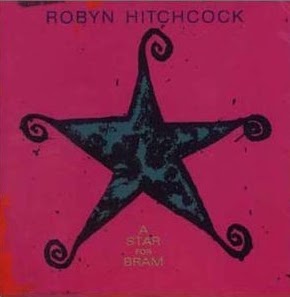
50. A Star for Bram


50. A Star for Bram, Robyn Hitchcock (Editions PAF!, 2000)

The Aughts began slowly for veteran British songwriter Robyn Hitchcock.  His Warner Bros. contract ended after three albums (including Mossy Liquor, the vinyl-only companion piece to his Moss Elixir album, both ’96), leaving him without major-label support for the first time since ’86.  Between ’00 and ’03 he quietly issued three albums on his own Editions PAF! label.  This trio included Robyn Sings, a live double album composed entirely of Bob Dylan covers, much of which had previously appeared as an extended appendix to the Warner-issued, promo-only ’97 single for his song Beautiful Queen.  The recycling of promo-only B-sides following the loss of a contract might seem an inauspicious move, were the performances not strong, sought-after material likely rejected for full release by Warner.  Two years before Robyn Sings, though, slipped another unusual album, A Star for Bram.  Released “under special license from Warner,” it arrived with the feel of a fan-club album and cover art almost replicating that of Jewels for Sophia (’99), his final Warners album.  Often diminished as a mere collection of Sophia outtakes, Bram indeed includes two songs that appeared on the Warner-issued, Sophia-supporting promotional EP entitled Rare Jewels.  While the Aughts would be Hitchcock’s most prolific decade, A Star for Bram was just one of a string of albums from the decade comprising outtakes, old material, or other oddities while masquerading as new releases.  A Star for Bram is unique among its colleagues, however, as it is arguably stronger than any of the four “real” new LPs that Hitchcock issued in the Aughts.

Bram is a tempered, darker sibling to Jewels for Sophia.  The Warner album is bright, often raucous, and comical; one can almost imagine a Warner executive opting against Bram’s less immediate songs and saying, “We want the funny songs, the ones where you talk about vegetables a lot.”  While the two albums’ most haunting song (No, I Don’t Remember Guildford) does appear on Sophia and Bram is not devoid of levity, Bram is the more subdued record.  It opens with two understated acoustic numbers; the second, the gently shimmering I Saw Nick Drake, is like a transcription of a dream, with Hitchcock meeting the long-dead British folksinger, doing chores together, and interacting in the surreal ways that only the subconscious can manifest; it is built on a transfixing repeated guitar figure and joined by Hitchcock’s highly reverbed wordless humming between the verses.  Judas Sings (Jesus and Me) and I Used to Love You are both stripped-down ballads, the latter using only voice and piano.  Bram’s electric numbers outnumber the unplugged entries, but these, too, are largely subdued.  A minimal, sax-tinted groove supports the skeletal boogie of Adoration of the City; the mild skiffle of The Philosopher’s Stone features just Jon Brion and Hitchcock, the latter adding melodic accents with a “harmony machine.”  The record’s two expository highlights are Nietzsche’s Way, its title punning on Spirit’s 1970 song Nature’s Way, and a new studio recording of Hitchcock’s nostalgic travelogue 1974, which previously appeared on the ’98 in-studio live soundtrack Storefront Hitchcock.  A final thread connecting the album to Jewels for Sophia is a dub version of that album’s Antwoman that gives the lilting original an ominous tint.  Hitchcock’s departure from the major-label system may have resulted in a circuitous new pattern of record-making, but as long as his catalog continues to generate albums as reliable as A Star for Bram it will be worth following.

Highlights: 1974, Daisy Bomb, Nietzsche’s Way, I Saw Nick Drake

Sublime bit: Those spectral, wordless choruses of I Saw Nick Drake.

Read the NOYOUCMON mission statement here.

Saturday, September 11, 2010

51. Just Beyond the River


51. Just Beyond the River, James Yorkston and the Athletes (Domino, 2004)

James Yorkston hails from Fife, Scotland, also home to Fence, a musicians’ collective and label borne of Kenny Anderson’s bankrupt record shop.  Anderson has recorded over two dozen albums as King Creosote; but, of Fence artists in the Aughts, it was Yorkston who held the highest profile.  His demo, recorded after a spell with various rock groups, attracted influential DJ John Peel and resulted in a ’01 solo 7” on the Bad Jazz label.  Entitled Moving Up Country, Roaring the Gospel and credited, for reasons unforthcoming, to “J. Wright Presents,” it is a soulful, sleepy shuffle that he reworked for his ’02 debut LP Moving Up Country.  After one more split single and a compilation appearance, Yorkston signed to Domino and issued a bevy of singles and EPs with them before his first full-length.  Yorkston remained part of the Fence community even after signing to a larger label, working with its artists including The Pictish Trail (aka Johnny Lynch, Fence co-director) and UNPOC.  Yorkston’s own work descends from Scottish and Irish folk music, guitar-based but with traditional instruments—whistle, pipes, accordion, fiddle, bouzouki.  His folk-based songs are often slow and deliberate, his voice rarely straying from a narrow range; the result is far from the celebratory jigs and reels associated with the traditional music of Yorkston’s homeland. 

Yorkston’s second full-length, Just Beyond the River, again recorded with a loose association of musicians dubbed the Athletes, utilizes stronger compositions and more focused playing for a sound more starkly emotional than his previous works.  On his debut LP Yorkston employed former Cocteau Twins bassist Simon Raymonde as producer; for River, he uses Kieran Hebden, who records electronic music under the moniker Four Tet.  Hebden’s own work incorporates guitar, piano, and other acoustic instruments, and he leaves no trace of synthetics on Yorkston’s album; as with Raymonde the collaboration appears incongruous, but Hebden conjures a haunting, sometimes hypnotic aspect setting River apart from Yorkston’s other Aughts works.  Several songs are skeletal, quiet affairs (We Flew Blind, Hermitage, This Time Tomorrow), and are countered by the swirling, push-and-pull, full-band arrangements of other numbers whose simple details—like the brushed drums in Heron—create both tension and resolution.  Shipwreckers builds to a swell, just as the storm that drives it subjects to shelter near a warm hearth, before flickering out like faded embers at sunrise.  In Banjo #1, Yorkston’s vocal melds with the banjo’s cyclical churn, matching the lyrical tension of a man apologizing to a leery prospective lover for his “need for clamour/my clumsy touch/and Catholic roving eye.”  Two of the album’s highlights are its sole traditional numbers: a variation of the ancient European murder ballad Edward is the album’s most chilling song, the desolate arrangement and Yorkston’s triplicate repetition of the final word of every line creating an unnerving effect; closing song The Snow It Melts the Soonest has a firmer arrangement yet, like Banjo #1, mesmerically blends Yorkston’s vocals with the instrumentation.  Yorkston recorded prolifically throughout the Aughts, and after this second full-length issued three more LPs and a host of singles, EPs, and limited-edition items.  Just Beyond the River and its quietly gripping, tempered undertow is a close contender for the finest among these many releases.

Highlights: Shipwreckers, Banjo #1, Edward, The Snow It Melts the Soonest

Sublime bit: The fleeting, tense half-steps of the violin that press through the between-verse instrumental passages of Shipwreckers.

Read the NOYOUCMON mission statement here.

Tuesday, August 3, 2010

54. Dark Days/Light Years


54. Dark Days/Light Years, Super Furry Animals (Rough Trade, 2009)

The eighth album by Welsh quintet Super Furry Animals, Hey Venus! (’07; see #65), was the psych-pop group’s first on the Rough Trade label.  Its streamlined blast of uptempo glam and the odd lovely ballad came at the new label’s behest, hoping for a return to the efficient vibe of the group’s ’90s work.*  The tour that followed the album’s release was another stripped-down affair, the band cutting back on the props and stage dressing that made previous jaunts quasi-theatrical affairs.  The willingness to tailor an LP to a record company’s desires might have been an ominous sign had the result not been one of the group’s most enjoyable records to date.  Following Hey Venus!, drummer Daf Ieuan released his first album with side project the Peth and frontman Gruff Rhys issued Stainless Style, a collaboration with producer/programmer Boom Bip, credited to Neon Neon and ostensibly a concept record about eccentric automotive engineer John DeLorean.  These solo detours, both on other labels, were evidence that Rough Trade would not strong-arm the band or its members into a specific vision.  When the Super Furries regrouped to record their ninth LP, the sessions would culminate in their most stretched-out, challenging vision yet.

At just over an hour, Dark Days/Light Years is practically twice as long as Hey Venus! and the longest SFA album to date; on vinyl, it is a double LP (though running at 45 RPM) whose garish artwork—a collaboration of the group’s two previous art designers, Keichi Tanaami and Pete Fowler—sprawls across both sides of its gatefold jacket and a two-sided 24x24 poster.  While its predecessor opened with a rollicking 43-second introductory theme, Dark Days slowly gurgles its way to the surface.  Opening cut Crazy Naked Girls begins with 51 seconds of muffled speech, the sounds of tuning up, and a false start before an overdriven drum beat kicks in, followed by a clipped, nearly falsetto Rhys vocal recalling Prince before abruptly changing at midpoint into an acid-rock blues jam that churns like an extended outro for the remainder of its six minutes.  Once through this virtual decoy the album returns to more conventional songwriting, soon making it clear that Dark Days is a groove-heavy affair. Several songs (most notably Moped Eyes and the nuttily titled The Very Best of Neil Diamond) are propelled by slinking arrangements worthy of the dance floor, even if the tempos remain at a low simmer.  The eight-minute Cardiff in the Sun is the album’s centerpiece, its Kosmische chillout groove giving way to blissful choruses consisting of its repeated title.  The album’s extended runtime means there is enough room for a handful of pop tunes, the best among them the pulsing jack-in-the-box rhythm of Inaugural Trams whose middle eight consists of a rap, in German, by Nick McCarthy of Franz Ferdinand.  Against all odds, it is one of the album’s best moments.  Another key pop track finds guitarist Huw Bunford taking lead vocals, the hideously titled yet wonderfully catchy White Socks/Flip Flops.  The record ends as oddly as it began, though, with the ten-minute Pric, a throbbing rock groove that trails off at roughly six minutes for an extended ambient coda.  A daunting listen on first blush, the album contains all the hallmarks that make Super Furry Animals one of the most inventive and charming pop groups of their time.  While not as immediate as their previous works, Dark Days/Light Years sustains repeated plays better than most of the band’s catalog once its rhythmic secrets are unlocked.

*For just one account of the Rough Trade request, see this Gruff Rhys interview: http://www.tinymixtapes.com/features/gruff-rhys-super-furry-animals

Highlights: Inaugural Trams, Inconvenience, The Very Best of Neil Diamond, Moped Eyes

Sublime bit: When Inaugural Trams slams back into its peppy groove after Nick McCarthy’s spoken guest vocal ends at 3:24.

Read the NOYOUCMON mission statement here.

Sunday, July 25, 2010

56. Gold Brick


56. Gold Brick, Jon Langford (ROIR, 2006)

Chicago-dwelling Welsh expatriate Jon Langford is one of rock’s most prolific artists.  While perhaps best known as a member of the Mekons from the Leeds punk class of ’77, Langford has made nearly three dozen albums with his other groups the Three Johns (’82-’90), traditional country collective the Pine Valley Cosmonauts, and cowpunk sextet Waco Brothers, as well as a multitude of collaborations with other songwriters.  Along with his tireless musical schedule, Langford is an accomplished visual artist; his paintings often depict other musicians, particularly the country and western acts who have inspired his own music since the Mekons shifted away from punk in the late ’70s.  Not until ’95 did Langford get around to issuing an LP under his own name; Misery Loves Company—credited to “Jonboy” Langford, along with the Cosmonauts—is a ramshackle but loving set of Johnny Cash covers (like his painting, Langford’s music often celebrates country artists).  With ’98’s Skull Orchard, a pop-tinged set of songs in honor of his Welsh homeland, Langford delivered his first true “solo” album, not hinging on collaboration or homage.  He would issue three more in the Aughts; works like Mayors of the Moon (’02, backed by Canadian alt-country group the Sadies) and All the Fame of Lofty Deeds (’04) are serviceable roots-rock albums melding cuttingly literate writing, amiable humor, and a keen insight to America’s cultural landscape. Langford’s next solo work, though, would take a confident and ambitious stride forward.

For Gold Brick, Langford took temporary leave of his usual solo label Bloodshot for NYC imprint ROIR, which had previously released Mekons and Three Johns one-offs. Subtitled Lies of the Great Explorers, or Columbus at Guantanamo Bay, it is an examination of post-9/11 American malaise and the impacts and shifting priorities of globalization.  Its first half focuses on individuals: the subjects of Little Bit of Help are “programmed for survival”; Workingman’s Palace chronicles the pressing need for escape, usually “where the Old Style light still shines”; Invisible Man illustrates regular folks’ 21st-century uncertainty, overlooked “like a pin in a map or dust on the screen.”  The title track addresses modernity’s solitude (“You leave home but you never leave home/Drive for miles in a car on your own”) and bland conformity (“The boring and phony/Are rocks for the lonely/To climb up on.”).  The second half dissects the U.S. mise en scène: Gorilla and the Maiden depicts Cold War Chicago’s incongruities of strip joints, Nazi marches, and investors who “paw at a city served up in chains”; Tall Ships imagines the vessels that carried many to the New World, now simply “carrying cargo/that nobody needs.”  An orchestrated cover of Procol Harum’s ’69 tune Salty Dog bridges the halves, in this context another depiction of immigration.  The finest piece is closing track Lost in America.  Composed for National Public Radio’s show of the same name and, in best Langford populist fashion, performed with musicians he found in the classifieds, it charts a course from pre-Colonial days to an imagined present where Columbus is detained by security and left to watch daytime TV, his mind reeling from the soulless progression of cartoons, game shows, and news-magazine exposés.  An astounding expository achievement, it should reassure anyone mistaking Gold Brick for a mere indictment of America: “We’ll turn the planes around today/And make them fly the other way/’Cos we know we’re all here to stay/And you know where you are/When you’re lost in America.”  Gold Brick examines a nation of proud individuals who may be a little worse for wear but who still believe in an American dream. It is Langford’s finest solo album to date and among the best work of his entire career.

Highlights: Lost in America, Gold Brick, All Roads Lead Back to Me, Invisible Man

Sublime bit: The beautiful arrangement of the title track, particularly Pat Brennan’s piano and Jean Cook’s violin lines.

Read the NOYOUCMON mission statement here.

Thursday, July 22, 2010

57. Truelove's Gutter


57. Truelove's Gutter, Richard Hawley (Mute, 2009)

Sheffield songwriter Richard Hawley—former Longpigs guitarist and Pulp sideman—is one of those trusty musicians whose excellence comes from finding a suitable niche and treading that same ground over a span of albums, each of which has its strengths yet may seem interchageable to the casual listener.  His solo material focuses on sentimental lyrics set to lush, old-fashioned pop arrangements that suggest a common ground between Buddy Holly’s orchestral work; the early rock material on Sun Records of the Elvis, Scotty & Bill trio; and jazz-pop singers like Nat “King” Cole and Johnny Hartman.  After a mini-album and four full-lengths, including the Mercury Prize nominee Coles Corner (’06; see #84), Hawley adjusted his formula to produce his most masterful work of the decade.

The follow-up to Hawley’s poppiest album to date, Lady’s Bridge (’07), Truelove’s Gutter is a departure from the post-war dance-band crooner material that made helped to make his previous two albums so enjoyable.  Here, Hawley does not abandon his proven form so much as he dials it down and stretches it out; this results in some of the most intimate, quiet material of his catalog as well as its most epic numbers.  Hawley had done quiet material before—the bulk of ’02’s Late Night Final and the final third of Coles Corner focus on hushed, sparse compositions—yet on Truelove’s Gutter the calmness takes the form of meditations.  Expanding on Hawley’s usual beat-combo instrumentation, the songs are accented by a bevy of unusual, sometimes arcane devices: a singing saw, the cristal bachet, a glass harmonica, the waterphone, Tibetan singing bowls, the Ondes martenot (the sole electric instrument of that lot, an early keyboard producing theremin-like vibrations).  This non-traditional accompaniment lends a unique sonic undercurrent to the record; when the opening cut As the Dawn Breaks slowly builds from a swelling ambient hum, to name one instance, the organic instruments can easily be mistaken for modern electronics.  Many songs on the album have extended run times, the average going over six minutes.  Two pieces, Remorse Code and Don’t You Cry, are ten minutes long.  Remorse Code is the album’s centerpiece; a ruminative, opaque depiction of drug addiction, it caresses a single, gentle riff for its duration.  “The ship is wrecked/With all hands/Look to the reef/False lights from the land,” Hawley sings; the capsizing metaphor ends bluntly with a haunting chorus of “Those white lines/made your eyes wide.”  No mere indictment of another person’s follies, its lyric concludes with “I was likewise/In those white lines.”  Don’t Get Hung Up in Your Soul is the most desolate number, Hawley accompanied by an almost inaudible guitar and bass with the singing saw adding a far-off and lonesome tone.  The album’s general quietude emphasizes the power of its occasional crescendo: the blazing orchestral swell that erupts in the fourth minute of the otherwise quiet Soldier On, for example, is the album’s most stunning moment in part because it happens only once.  The songs of Truelove’s Gutter strip the bulk of filigrees from Hawley’s proven approach to pop songwriting, leaving its compositions laid bare.  Sometimes almost painfully frank yet thoroughly compelling precisely because of its intimacy, this fifth full-length album of Hawley’s is a striking achievement that will long resonate as a peak of his career.

Highlights: Remorse Code, Open Up Your Door, Soldier On, For Your Lover Give Some Time

Sublime bit: Those knowing refrains of Remorse Code and the mournful guitar solos surrounding them, especially the one from 5:34 to 7:33.

Read the NOYOUCMON mission statement here.

Sunday, July 11, 2010

59. I Am a Bird Now


59. I Am a Bird Now, Antony and the Johnsons (Secretly Canadian, 2005)

Antony Hegarty, an England-born, longtime US resident, toiled for years in the experimental theatres and cabarets of New York City before an arts grant in ’96 enabled him to record professionally with other musicians.  Hegarty named his nascent group after late transgender activist Marsha P. Johnson, and constructed a sparse, piano-based sound featuring his theatrical, almost operatic singing voice.  Their increasingly frequent late-Nineties live gigs got the attention of experimental artist-musician David Tibet, who had worked with Psychic TV and Nurse With Wound while leading his own group, Current 93, and operating the small UK label Durtro.  Tibet offered Hegarty an album release, resulting in an eponymous ’98 LP.  Hegarty’s talent arrived fully formed on Antony and the Johnsons, no surprise after eight years of live performance.  A relatively straightforward set of piano ballads whose lyrics address difficult topics from romantic catharsis to psychosexuality, it is good in its own right but the least compelling of his three studio albums to date.  It would be seven years before his next album; the group’s only new releases until then were the ’00 three-song Durtro EP I Fell in Love With a Dead Boy, two-thirds of which consisted of covers, and two minor split releases with Tibet’s Current 93 (half of a live EP and one studio outtake on a 7”).  While Hegarty lacked in prolificacy, his connections in the NYC art world secured him numerous collaborations and film appearances; most notably, he sang lead vocals for two songs on Lou Reed’s ’04 live LP Animal Serenade. These guest spots were no preparation for the creative leap of his next studio album.

I Am a Bird Now is a stark, soulful set of songs addressing gender identity, dysphoria, and psychic ascension from traditional concepts of sexual classification.  Twenty musicians and vocalists are credited, almost twice as on his debut LP, and only drummer Todd Cohen is retained.  The accompaniment includes strings and horns, used judiciously with minimal arrangements reminiscent of a chamber ensemble.  While Hegarty’s voice is the focal point, several other singers appear; Lou Reed contributes a spoken introduction to Fistful of Love, Devendra Banhart sings a brief aria on Spiralling, and Rufus Wainwright sings an entire song, the excellent What Can I Do?  The finest guest vocal comes when Hegarty duets with Boy George on the emotional You Are My Sister; the performance illustrates the power of George’s voice, a reminder that his Aughts activity transcended his tabloid-level mayhem.  “Hope there’s someone who’ll take care of me/When I die, when I go,” Hegarty sings on the opening cut, presaging the ruminations on death and transition he would examine closely on his next album, The Crying Light (’09; see #93); death is a theme on Bird as well, though here it is often followed by a second birth—that of the soul and sexual spirit. This is most pronounced in For Today I Am a Boy and, in the triumphant album closer, Bird Gehrl: “I’m gonna be born/Into, soon, the sky/’Cause I’m a bird girl/And the bird girls go to heaven/I’m a bird girl/And the bird girls can fly.”  Hegarty’s compositions on I Am a Bird Now speak to the ecstatic truths of individual identity, with a command seen in few other singers of the time.  His creative growth in the seven years since his first album represents one of the most startling progressions in Aughts pop music.  Bird controversially won the UK Mercury Prize (not for subject matter, but for disputes over Hegarty's residency; the prize is intended for British recordings), and remains NOYOUCMON’s pick for best album of 2005.

Highlights: Bird Gerhl, Fistful of Love, You Are My Sister, Hope There’s Someone

Sublime bit: One comes along about every three minutes on this album, but the sheer emotion of his vocal on Bird Gehrl encapsulates them all.

Read the NOYOUCMON mission statement here.

Thursday, July 8, 2010

60. Sweet Warrior


60. Sweet Warrior, Richard Thompson (Shout! Factory, 2007)

Richard Thompson is, it can be argued, a contender for greatest living guitarist.  His knack for avoiding the limelight and his unique playing style that abstains from typical guitar-god blues hokum means that your average Crossroads Festival attendee might not think so, but an examination of Thompson’s work reveals an astonishing breadth, color, and agility seen in few other masters of the instrument.  His first recorded work came as a member of English folk-rockers Fairport Convention, resulting in five studio albums from 1967 to his ’71 departure to pursue a solo career, and while the group continues to this day their most cherished material comes from the relatively brief Thompson era.  Prior to his ’72 solo debut Henry the Human Fly, Thompson also served as a session man for a variety of artists that included Nick Drake.  Following Fly, Thompson embarked on a joint career with one of that album’s backing vocalists, Linda Peters, who became his wife; they recorded six albums together before divorcing in ’82.  While operating in traditional folk and folk-rock milieu on his own albums, Thompson has collaborated with a wide array of artists, including David Thomas, frontman of visionary rock provocateurs Pere Ubu; experimental guitarists Henry Kaiser and Fred Frith; Captain Beefheart drummer John French; and, in perhaps his strongest guest appearances, with Anton Fier’s avant-rock project the Golden Palominos.  Thompson’s playing has figured heavily in a handful of films, most notably Werner Herzog’s Grizzly Man (’05).  Were Thompson merely a brilliant guitarist, his nearly two-dozen post-Fairport studio albums would be a shallower pool; his exceptional talent as a singer-songwriter makes his albums rare demonstrations of first-class instrumental and rhetorical prowess coming from a single source.

Thompson recorded three studio albums in the Aughts, alongside a wealth of live albums (mostly fan-club releases) and the Grizzly Man soundtrack.  Of the trio of studio efforts from the decade, Sweet Warrior (’07) is the last and finest, a return to electric work after the largely acoustic ’05 Front Parlour Ballads.  Having left the major label system after '99's strong Mock Tudor, Thompson made Warrior on his own dime and shopped it to indie labels after its completion.  A balance of pop tunes (Mr. Stupid, Needle and Thread, and the sax-driven jaunt Bad Monkey the best among them) and thoughtful ballads, the album embodies its title by examining the battles of romance.   Elsewhere, though, the warrior concept is addressed in regard to the futile sides of war and military life (the concepts are mingled in an inner-sleeve photo of a flummoxed Thompson in military uniform and camouflage facepaint, flanked by beautiful women kissing his cheeks).  Dad’s Gonna Kill Me refers not to fears of an angry father; the title instead invokes Baghdad and the fears of a deployed soldier in the face of unarmored Humvees, conservative home-front propaganda, and the specter of death.  Even better is Guns Are the Tongues, the album’s climax and one of Thompson’s strongest pieces of writing.  It is a ballad of a seducer and her line of soldier lovers, each of whom is enlisted to avenge her family’s history: “Guns are the tongues, Little Joe/The only words we know/The only sound that’ll reach their ears.”  For every agonizing ballad there is a pair of upbeat, ebullient bursts of rootsy pop, balancing the album between confounding matters of the heart and weary stories of battle.  If the album has a fault, it’s length—at 66 minutes, Sweet Warrior is a heavy listening commitment; yet, it is one with many rewards.  At age 57 and in his fourth decade of recording, Thompson made one of his best albums.

Highlights: Guns Are the Tongues, Take Care the Road You Choose, Johnny’s Far Away, Too Late to Come Fishing

Sublime bit: The end chorus of Guns Are the Tongues and his soaring vocal on the last plea of “Dry the old eyes of my mother, Little Joe” at 6:02.

Read the NOYOUCMON mission statement here.

Sunday, July 4, 2010

61. Olé! Tarantula


61. Olé! Tarantula, Robyn Hitchcock and the Venus 3 (Yep Roc, 2006)

London-born songwriter Robyn Hitchcock has maintained a prolific solo career since leaving new-wave psych-poppers the Soft Boys in 1980.  Issuing some three dozen albums, half of those being studio efforts and the rest comprising outtakes, radio sessions, live gigs, and revisitings of old work, Hitchcock has developed a devoted following while consistently delivering engaging new material.  A certified English eccentric, Hitchcock built a reputation for unorthodox lyrics about vegetables, insects, and other such matter, though it is unfair to categorize him as a strict humorist or capable only of idiosyncratic composition.  His quick-witted, picturesque writing makes him a natural descendant of influences Bob Dylan and John Lennon, and he has a knack for fragile beauty as much as for spirited, assertive pop music.  While he began the Aughts with a dismissal from Warner Bros., leaving him without a major-label deal for the first time since the late Eighties, it would be his most prolific decade, producing six studio albums, another six of live material and/or outtakes, two comprehensive box sets of his ’80s solo work, as well as a Soft Boys reunion album, accompanying EP, and an exhaustive reissue of their ’80 LP Underwater Moonlight.

Hitchcock’s ’06 studio album Olé! Tarantula, his sixteenth not counting Soft Boys material, finds him recording with a dedicated group for the first time since the ’93 disbanding of his backing group the Egyptians.*  The Venus 3 features several well-known Seattle-based musicians: longtime collaborator Peter Buck on guitar, R.E.M. touring drummer Bill Rieflin (also late of numerous industrial groups including Ministry, KMFDM, and Pigface), and Scott McCaughey of the Young Fresh Fellows and the Minus 5 (the latter of which has also included Rieflin).  The album also features among its numerous guest spots contributions from former Soft Boys Kimberley Rew and Morris Windsor.  Most of Hitchcock’s previous Aughts work is reserved, acoustic music; stripped-down records like Luxor (’03) and Spooked (’04, his first on now-longtime label Yep Roc) are enjoyable, but are not among his most memorable efforts.  Olé! Tarantula is, conversely, his most electrified album since his work with the Egyptians.  It opens with two numbers that recall the finest of his ’80s pop heyday.  The hard-edged Adventure Rocket Ship juxtaposes a yearning lover with cosmic detritus like “skeletons of spacemen” and time-warp romance (“I kiss you in the past”); next is Underground Sun, a summery pop blast whose sound masks its lyric about a deceased friend (“You lie so lonely/Listening to the silence of the graves/You don’t belong there/You belong down south among the waves”).  A third pop blowout comes with ’Cause It’s Love (Saint Parallelogram), written with reclusive XTC frontman Andy Partridge yet unfortunately not boasting a guest appearance from its co-author.  Reprised from the Japan-only ’05 odds-and-ends LP Obliteration Pie is (A Man’s Gotta Know His Limitations) Briggs; despite a new arrangement with an incongruous synth line, the Tarantula version remains an album highlight.  The album’s closing song is its most haunting; N.Y. Doll is a moving account of the troubled last years of New York Dolls bassist Arthur Kane.  Olé! Tarantula is a contender for Hitchcock’s best work of the decade; those craving more should seek out its companion EP Sex, Food, Death...and Tarantulas, which features live versions of Briggs and five other tunes from Hitchcock’s deep catalog.

* Or fifteenth, to those who insist on categorizing his 2000 LP A Star for Bram as a mere set of outtakes from the '99 Jewels for Sophia album.  I maintain otherwise.

NOTE: As a proponent of wax, it pains me when I cannot recommend a vinyl pressing of an album; however, the vinyl pressings produced by Yep Roc are routinely substandard.  Overzealous bass response, muddy mastering, and general poor fidelity render this label's releases best purchased on the compact disc format.  I've heard both versions of Olé! Tarantula, and the CD trounces the vinyl version.  If you do not care about fidelity, purchase a download of this album.  The vinyl receives a NOYOUCMON "do not buy" warning.

Highlights: Underground Sun, Adventure Rocket Ship, N.Y. Doll, (A Man’s Gotta Know His Limitations) Briggs

Sublime bit: Underground Sun’s pulsing bridge (“One for the girl who went away/Two for the girl that went astray/Three is in between you”).
 
Read the NOYOUCMON mission statement here.

Thursday, June 17, 2010

65. Hey Venus!


65. Hey Venus!, Super Furry Animals (Rough Trade, 2007)

Welsh psych-poppers Super Furry Animals began the Aughts in transition.  Their label, Creation, closed in ’99 shortly after declining to release their fourth LP Mwng.  The band had sung in English since their second release, the ’95 EP Moog Droog, in an effort to expand their audience; after three well-received albums that flirted with Britpop, allowing them a few chart successes, the Super Furries opted for a stripped-down, self-made LP in their native tongue.  Released in ’00 on their own Placid Casual imprint, Mwng achieved unexpected chart success and a Parliamentary recognition for perpetuating the Welsh language.  This linguistic tribute to the homeland would be short lived.  The group soon gained major distribution through Sony, and Mwng’s follow-up, Rings Around the World (’01), was back to English; it boasted an increased budget, a guest spot from Paul McCartney on nearly inaudible sound effects (the group had worked with him the year before on the experimental Liverpool Sound Collage album), and the flair of being the first album simultaneously released as a long-form video on DVD.  The band’s ’90s work is energetic and sprightly, inspired by ’60s psychedelic pop yet retaining a nervy edge, the affinity for impish wordplay and translingual puns intact since the days of the all-Welsh group Ffa Coffi Pawb from which Super Furry Animals emerged.  The slightly mellower pace that began with Mwng continued through most of the group’s Aughts work, often serenely soulful though still possessing electronic-filled, wall-of-sound production tricks and spirited, fluent genre-hopping that ensure each album has its share of inventive and exciting tunes.

Just as Creation’s dissolution sparked a shift in band dynamics, the conclusion of their Sony contract resulted in a new approach.  Signing to Rough Trade for their eighth LP, Hey Venus!, the band shifted strategy in several areas: production (replacing the previous two albums’ Mario Caldato, Jr., with David Newfeld); cover art (the first time since their ’96 debut LP that Pete Fowler didn’t handle the design); and, most importantly, a shift back to the high-spirited pop antics of their early days.  Hey Venus! opens with the 43-second The Gateway Song, a barreling little ditty announcing itself to be “a numero uno singalong” that “brings us up nicely to the harder stuff,” before crashing into the breakup song Run-Away, a sonic update of boom-sha-la ’60s girl-group sounds with frontman Gruff Rhys opening with the recitation “This song is based on a true story, which would be fine if it wasn’t autobiographical” before a grieving session including the crooned lament “I still recall your banking details.”  This frivolity continues on song like Neo Consumer, a wild glam stomper punctuated by a whooping refrain; it concludes, “I believe in death after life/Switch off the light/Bye! Bye!”  Baby Ate My Eightball employs an absurd lyric about an infant who swallows someone’s drug stash, and while the topic is grimly unsavory the funky, near-disco arrangement makes it the album’s resident dance blast.  The album offers more than just nutty romps; a handful of songs, most notably The Gift That Keeps Giving and the closing number Let the Wolves Howl at the Moon, are lovely down-tempo excursions. The band’s shortest LP by far at a breezy 36 minutes, Hey Venus! is also their most fun and a highlight of the Super Furry Animals’ Aughts catalog.

Highlights: Neo Consumer, Run-Away, Show Your Hand, Baby Ate My Eightball

Sublime bit: When Rhys shifts tempo ever so briefly during the closing chorus of bubbly pop-ballad showcase Show Your Hand, at 2:26.

Read the NOYOUCMON mission statement here.

Saturday, May 29, 2010

71. Bugged


71. Bugged, Babybird (Echo/Roadrunner UK, 2000)

Experimental actor and amateur recordist Stephen Jones spent much of the ’90s making hundreds of solo demos, releasing many in a series of inventive and irreverent lo-fi albums under the moniker Baby Bird.  They revealed Jones to be a natural at numerous styles--ambient instrumentals; aching, falsetto-laden ballads; nutty, Casio-driven pranksterism; and effortlessly catchy pop.  Each came with a postcard asking listeners to vote for their three favorite songs.  Interest brewed in the British press, and after his fourth LP Jones scored record deals in the UK and US. For the big-league debut, Ugly Beautiful (’96), Jones and his touring band recorded slick new versions of songs chosen by the postcard voters; a few new tunes were recorded as well.  One of the new tunes, the bubbly You’re Gorgeous, became a #3 UK hit and the group was temporarily swept up in the commercial tidal wave of Britpop.  After this, Jones issued a fifth solo lo-fi work, Dying Happy (’97); for the next studio album, Jones and the group (less keyboardist Huw Chadbourne) retreated from the high-spirited stylings and chart pressures of Ugly BeautifulThere’s Something Going On (’98) is not short on catchy tunes, but is weighted more heavily toward dark, melancholy material; the album is stronger and more unified than its catch-all predecessor.  No more hits were forthcoming, though, and the group’s US label dropped them without releasing the album; as the Nineties ended, Jones and Babybird returned to cult-act status.

The third Babybird album, Bugged, appeared in the first year of the new decade, the group down to a trio including new member and longtime Babybird engineer and collaborator Matt Hay.  The most energetic, inspired Babybird record to date, the beat-happy Bugged opens boisterously with the thumping, guitar-spiked dance tune The F-Word (later used as theme music for TV chef Gordon Ramsay’s cooking show of the same name).  Eyes in the Back of Your Head and Till You Die follow a similar raucous model, but the album’s most sparkling moments come with its calmer tunes.  Fireflies has a gentle drum loop and simple piano line, its choruses of “If I find them/I’m going to kill them” highlighting Jones’s knack for turning caustic lyrics into pretty melodies.  Wave Your Hands manages to spin a cliche into a beautiful multi-tracked vocal showcase (“Throw our hands in the air/And wave them in the air/Like you just don’t care”).  The album has the plushest arrangements of Jones’s catalog to date; Hay’s programming adds many fine touches, like the synth trumpets in Getaway and strings on All I Want Is Love.  After Bugged, the Aughts saw Jones release three albums under his own name (including two sets of ambient “soundtracks”) and an ’08 double album eponymously credited to Death of the Neighbourhood.  He occasionally revisits the Babybird label, as with the ’06 Between My Ears There’s Nothing but Music; for an ’02 box set of the lo-fi recordings he even made a sixth volume, The Black Album. They all have their moments, but Bugged is his strongest Aughts release by far and a perfect entry point to his complex discography for those unable to locate his classic lo-fi albums.

Highlights: Fireflies, The F-Word, Wave Your Hands, All I Want Is Love

Sublime bit: The shimmering, minimal piano lines that flit through the choruses of Fireflies.

Read the NOYOUCMON mission statement here.